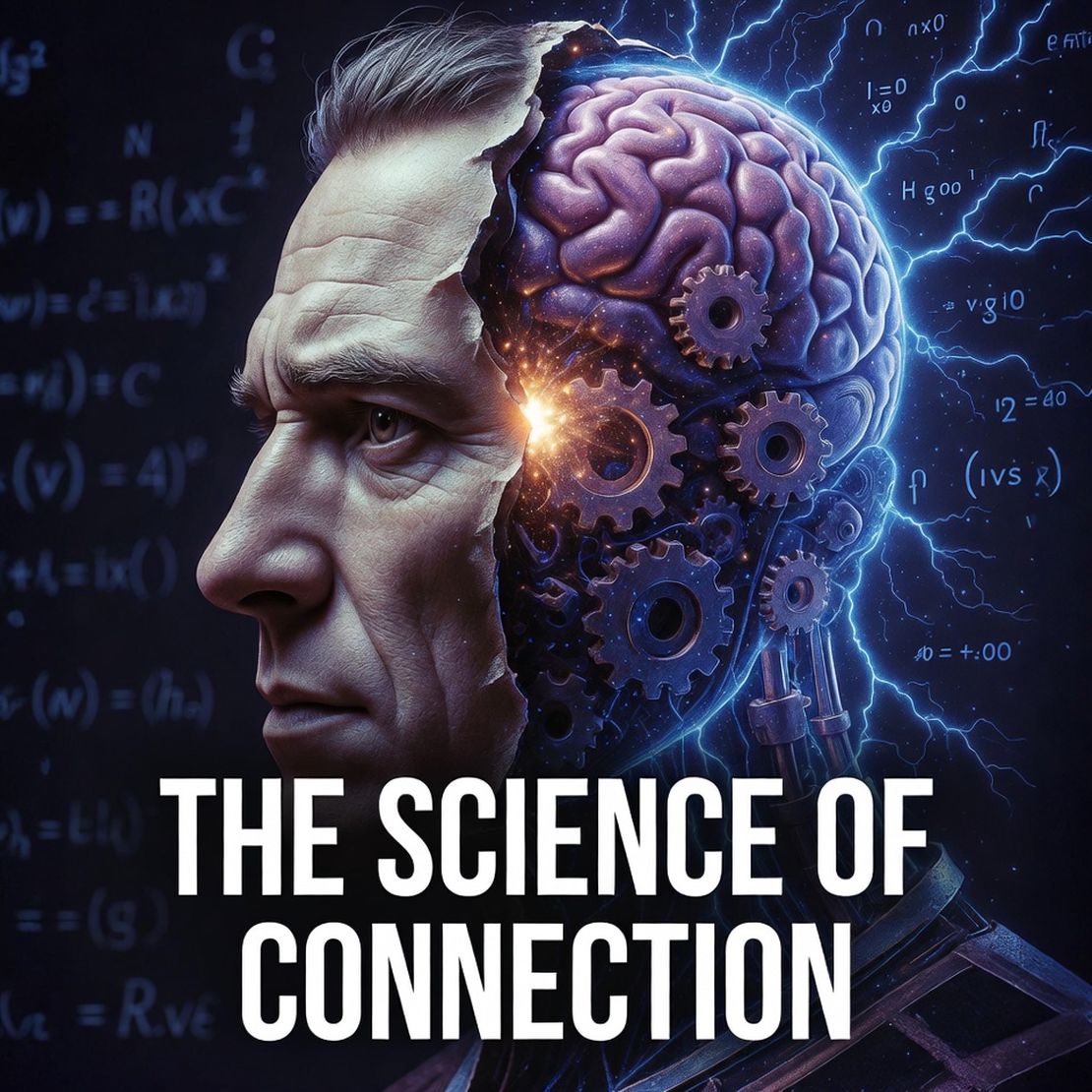
Attachment Styles and the Neurochemistry of Love: From Infancy to Adult Relationships
This is the second part of my breakdown of the neuroscience of emotions and relationships. Read Part 1: Limbic Friction and Emotional Regulation first. Part 3: Communication and Repair covers practical tools for couples.
Infancy and the Roots of Attachment
An infant’s brain has one primary goal: predicting whether a caregiver will meet their needs. Attachment styles are not random. They are formed based on how a caregiver responds to the infant’s distress.
The Four Attachment Styles
Psychologists John Bowlby and Mary Ainsworth developed attachment theory over decades of observation. They identified four distinct styles:
Secure attachment develops when a caregiver consistently responds to the infant’s distress with warmth and soothing. The child learns that needs are met and that the world is basically safe. As an adult, this person tends to trust others, communicate openly, and maintain healthy boundaries. They can be close to others without losing themselves.
Anxious attachment develops when a caregiver responds inconsistently. Sometimes they are warm. Sometimes they are distant. The child becomes hypervigilant, always scanning for signs of abandonment. As an adult, this person may worry excessively about relationships, seek constant reassurance, and struggle with jealousy.
Avoidant attachment develops when a caregiver is consistently distant or rejecting. The child learns that depending on others leads to disappointment, so they become self-reliant. As an adult, this person may value independence above all, struggle to express emotional needs, and pull away when relationships get too close.
Disorganized attachment develops in environments of fear or trauma. The caregiver is both a source of safety and a source of threat. The child never develops a coherent strategy. As an adult, this person may have chaotic relationships, difficulty trusting, and intense emotional reactions that feel out of control.
The good news is that attachment styles are not permanent. The brain remains plastic throughout life. With awareness and effort, you can shift toward more secure patterns.
The Bonding Process
The formation of a secure bond relies on the caregiver’s ability to soothe the infant. This bonding process occurs through a specific neural circuit comprising four “Glue Points”:
- Gaze: Eye contact.
- Voice: Specifically prosody, the rhythm, pitch, and tone of speech.
- Affect: The display of emotion.
- Touch: Physical contact.
These same four elements carry into adult relationships. When you look into your partner’s eyes, speak with warmth, show genuine emotion, and touch them, you are activating the same bonding circuitry that wired your first attachments.
The Biology of Puberty
Puberty is not just a phase of rebellion. It is a biological mandate for dispersal. The adolescent brain is rewired to distance itself from parents to find a mate.
- Hormonal Triggers: Puberty is initiated by hormones like Leptin (signaling sufficient body fat and energy) and Kisspeptin.
- Pheromones: Chemical signals from others can accelerate or delay puberty. The Vandenbergh Effect describes how exposure to non-related male pheromones can accelerate puberty in females.
The Autonomy Buffet
Adolescents test boundaries to ensure the parent-child bond is strong enough to withstand their independence. To manage this, Huberman suggests the “Autonomy Buffet”: parents should provide a limited set of safe choices rather than total control or total freedom.
How Stress Affects Relationships
Stress does not just live in your body. It seeps into your relationships. When cortisol is elevated, your brain shifts into survival mode. It prioritizes threat detection over social connection. You become more irritable, less patient, and quicker to interpret neutral comments as attacks.
Huberman explains that chronic stress reduces your capacity for executive function in social contexts. The part of your brain that helps you pause, consider your partner’s perspective, and choose a thoughtful response gets suppressed. You react instead of respond.
This is why couples often fight more during stressful periods. It is not that the relationship is worse. It is that each person’s nervous system is running hot. Recognizing this can change how you interpret conflict. When your partner snaps at you after a hard day, it might not be about you.
A perspective on accepting things as they are helps here. You cannot eliminate stress from life, but you can stop expecting your partner to be unaffected by it.
The Neurochemistry of Connection
What we call love is largely driven by a cocktail of powerful neurochemicals.
Oxytocin: The Hormone of Synchronization
Often mislabeled simply as the love hormone, Oxytocin is actually the hormone of synchronization. It aligns the internal states of two people. If one feels sad, the other feels it too. While it promotes trust and pair-bonding, it can also increase bias against those outside the in-group.
Vasopressin: Commitment and Memory
Vasopressin is linked to long-term monogamy and sexual jealousy. It is essential for remembering social interactions. Studies in prairie voles show that blocking vasopressin receptors prevents pair-bond formation entirely.
Dopamine: The Motivation Molecule
Dopamine drives the wanting and seeking system. In the early stages of a relationship, dopamine creates the euphoria and obsessive thinking that characterize new love. As relationships mature, dopamine sensitivity shifts. The intense highs level out. This is normal, but many people misinterpret it as the relationship dying. What is actually happening is that the dopamine system is recalibrating from novelty to depth. The neuroscience of habit formation explains how this same dopamine system drives long-term bonding rituals.
Frequently Asked Questions
Can attachment styles change in adulthood?
Yes. While your early attachment patterns create strong defaults, the brain’s neuroplasticity allows you to develop more secure patterns over time. Therapy, secure relationships, and deliberate practice all help.
Is oxytocin really the love hormone?
Not exactly. It is better understood as the synchronization hormone. It aligns your internal state with someone else’s. This explains why it strengthens bonds with partners but can also amplify bias against outsiders.
How does stress affect relationships?
Chronic stress reduces your capacity for executive function in social contexts. Your brain prioritizes threat detection over connection. Recognizing this can help you interpret conflict more accurately.
Continue reading: Part 3: Communication and Repair | Back to Part 1: Limbic Friction
Related Posts
DAPPER Framework Part 2: Excitement, Reinvention, and Breaking Your Patterns
DAPPER Framework Part 2: Excitement, Reinvention, and Breaking Your Patterns This is part 2 of a 2-part series. Read part 1: how to name your demon and calculate the price of staying stuck.
Read More
Living With the Hunter Brain: Science, Strategies and Practical Advice
This is part 2 of a two-part series on the hunter brain theory of ADHD. Read part 1: Understanding ADHD as an Evolutionary Advantage ←
Read More
How to Find Your Ikigai: The Japanese Secret to a Long and Happy Life
How to Find Your Ikigai: The Japanese Secret to a Long and Happy Life Have you ever wondered what the secret is to a life filled with purpose, happiness, and longevity? The answer might lie in a concept from the island of Okinawa, Japan—a place famous for having the highest concentration of centenarians in the world. This concept is called Ikigai.
Read More