
Why Reading Books Can Actually Change Your Life
I used to think reading was boring. I mean, who wants to sit around with a book when there are videos to watch and games to play? Then I started getting into it properly, and it changed my perspective. Not just on what I know, but on how I think.
The Problem With Modern Entertainment
Here’s what I’ve realized: modern entertainment is designed to give us quick hits of pleasure. Social media, short videos, games. They are all engineered to hook you fast and keep you scrolling. I’ve caught myself picking up my phone during a slow moment, only to look up forty minutes later having absorbed almost nothing.
There’s a real cost to this. When every app is optimized for instant engagement, your ability to sit with something slower starts to atrophy. Reading a book can feel like exercise after months on the couch.
And here’s the thing: those quick hits don’t build anything. They’re like sugar for your brain. Feels good in the moment, but you’re not better off afterward.
What Reading Actually Does For You
First, books give you depth. A YouTube video can cover a topic in ten minutes. A book can spend a hundred pages exploring the same subject in detail: nuances, counterarguments, the full context. There is no shortcut for that kind of treatment.
Second, reading improves your ability to think. When you read, you build mental models, track arguments, visualize scenes, make predictions and check them against what comes next. It is active, not passive. Your brain does real work. Over time this strengthens your capacity for sustained logical reasoning.
Third, books expose you to ideas you would not otherwise encounter. I have learned more from books I picked up on a whim than from years of formal education. The best minds in history wrote down what they figured out, and you can just read it. That is a kind of access no other medium matches.
Fourth, reading rewires your brain for better expression. You absorb sentence structure, vocabulary, and rhythm by osmosis. The more you read, the better you write and speak. I notice this in my own writing. The weeks when I read a lot, my sentences come out cleaner.
Fifth, books change your perspective. They put you inside other people’s heads, show you viewpoints you never considered, and challenge beliefs you take for granted. Some books have genuinely shifted how I see the world.
Sixth, and this surprised me most: reading changes your brain at a physical level.
The Neuroscience of Reading
Here’s something I did not know until I started looking into it: reading is not natural for the human brain. Unlike spoken language, which we evolved to process, written language has only existed for about five thousand years. That is not enough time for evolution to build dedicated reading circuitry.
So your brain does something remarkable instead. It cobbles together existing systems: the visual word form area in the left fusiform gyrus, language processing regions in the temporal lobe, attention networks in the frontal cortex. These systems together create what neuroscientists call the reading network. The more you read, the more efficient this network becomes. It is like a custom neural circuit that builds itself through use.
Brain imaging studies show that literacy physically changes the brain. In people who learn to read as adults (researchers have studied this in India and Portugal), the brain’s structure actually reorganizes. White matter tracts strengthen. The corpus callosum thickens, improving communication between hemispheres. The occipito-temporal region starts responding to letters in ways it never did before.
Reading also involves the hippocampus, the brain’s memory hub. Every time you follow a narrative or track an argument, your hippocampus is encoding timelines, locations, and relationships. This is why reading is one of the best cognitive workouts available. It engages more distributed neural networks than almost any other activity.
These changes happen at any age. Your brain is far more plastic than most people realize. Reading is one of the best ways to exercise that plasticity.
Deep Reading vs. Skimming
There’s a big difference between reading a book and the kind of reading we do online. On the web, we skim. We scan for keywords, jump between tabs, check notifications. Our eyes move in an F-pattern. We are looking for information, not immersion.
Deep reading is different. It is slower. It asks you to hold multiple threads in your mind at once: character, plot, theme, subtext. It requires sustained attention, which is exactly the skill that modern life erodes. Every notification, every tab switch, every glance at your phone trains your brain to expect constant novelty. Deep reading trains the opposite: the ability to stay with one thing.
When I am deep in a good book, I enter something close to a flow state. Time disappears. I am not aware of myself reading. I am just in the world of the book. That experience is increasingly rare in modern life, and I think that is a problem.
That kind of immersion is hard to replicate with screens. Not impossible, but harder. The interruption potential is always there: a notification, a flicker of doubt, the urge to check something. With a physical book, none of that exists. The page just sits there, waiting for you.
How Reading Builds Empathy
One of the most surprising benefits of reading, especially fiction, is what it does to your ability to understand other people.
There is real research on this. Multiple studies have found that reading narrative fiction improves what psychologists call theory of mind: your capacity to infer what someone else is thinking or feeling. A 2013 study in Science showed that reading literary fiction temporarily improved participants’ scores on tests of social perception and empathy. The theory is that following a character through their inner world exercises the same neural circuits you use for empathy in real life.
I have felt this myself. After reading a novel with a deeply drawn protagonist, I notice I am more patient with people for the next few days. More curious about what is going on in their heads. It feels like my empathy muscles have been worked out.
Non-fiction does something related but different. It gives you conceptual tools to understand why people behave the way they do. Psychology, history, and biography all build mental models of human behavior that make you a better reader of people.
Cognitive Reserve and Brain Health
Here’s the long game. Reading throughout your life is associated with something called cognitive reserve. The idea is that your brain builds extra neural connections over a lifetime of mentally active pursuits, creating a buffer against age-related decline.
The research is striking. A 2013 study in Neurology found that people who engaged in mentally stimulating activities like reading in both midlife and late life had a 32 percent lower risk of cognitive decline. Among those who did develop dementia, lifelong readers tended to maintain function longer because their brains had built more backup capacity through years of use.
The general idea is that every book you read adds a little more to that reserve. More vocabulary, more mental models, more connections between ideas. When aging starts to take its toll on the brain, people with higher reserve can afford to lose more before they show symptoms.
I think about this when I meet someone my age who has not read a book in years. It is not just that they are missing out on knowledge. They are missing out on the slow, cumulative brain-building that only consistent reading provides.
My Personal Favorites
Since I started reading more, here are some books that have really impacted me:
For productivity and habits, “Atomic Habits” by James Clear is excellent. The core idea, that small changes compound into massive results, changed how I approach everything.
For thinking about time differently, “Four Thousand Weeks” by Oliver Burkeman is worth reading. It is a philosophical look at time management that starts from a radical premise: you will never get everything done, and that is fine. It freed me from a lot of stress around productivity.
For learning to prioritize, “Essentialism” by Greg McKeown changed how I decide what to work on. The question “Is this the most important thing I could be doing right now?” now runs in the background of my mind constantly.
For understanding money, “The Psychology of Money” by Morgan Housel is fantastic. It is less about math and more about behavior: how our personal histories, egos, and fears drive financial decisions. More useful than any investing guide I have read.
And for fiction, I have been going back to books I read years ago and finding new meaning in them. The Alchemist hit differently at thirty than it did at twenty. That is one of the great things about reading. The book stays the same, but you change, so the experience is always new.
The Community Aspect
One thing that surprised me is how social reading can be. I used to think of it as solitary, but there are book clubs, online discussion groups, reading challenges, all kinds of ways readers connect.
People who read are genuinely passionate about sharing what they have learned. I have had conversations with strangers about a book we both loved that felt more substantial than most small talk. Sharing a great reading experience builds connection fast.
If you are reading alone, consider joining a club or even just talking about what you are reading with friends. It changes the experience.
How to Build a Reading Habit That Sticks
If you are not a regular reader, here is what I have learned about making it stick:
Start small. This is the most important thing. If you try to read for two hours a day starting tomorrow, you will burn out in a week. Fifteen minutes a day will get you through a dozen books a year. That is a real reading habit.
Read what you actually enjoy. Not what you think you should read. Not the classics because someone told you they are important. Read thrillers, sci-fi, romance, whatever hooks you. The habit comes first. The reading list improves on its own over time.
Use habit stacking. Attach reading to something you already do. Coffee in the morning? Read for ten minutes while you drink it. Bedtime routine? Read for fifteen minutes before sleep. The neuroscience of habit formation shows that linking a new behavior to an existing cue is one of the most reliable ways to make it automatic.
Try different formats. I thought I was a physical-book person until I got a Kindle. Now I read more because I always have a book with me. Audiobooks work great for walks and commutes. Find what fits your life.
Keep a list of what you want to read next. I use a simple note in my phone. Whenever I hear about an interesting book, I add it. Having the next read lined up removes the friction of deciding what to start.
Give yourself permission to quit. Life is too short to finish books you hate. If you are fifty pages in and not enjoying it, put it down and pick up something else. The goal is to build a habit, not to suffer through bad books.
Track your reading. I keep a simple list of books I finish each year. Seeing the number grow is surprisingly motivating, and it helps me remember what I have read. Some people use Goodreads or StoryGraph for this. Paper and pen works just as well.
My Challenge To You
If you are not reading regularly, try it for thirty days. Just fifteen minutes a day. See if it changes how you think, what you learn, and how you feel.
I think you will be surprised.
Reading is one of the best investments you can make in yourself. Start today. Even fifteen minutes counts.
Related Posts

The Atomic Habits Secret Nobody Talks About
The Atomic Habits Secret Nobody Talks About I read “Atomic Habits” by James Clear a while ago. Like most people, I loved it. The ideas about habit stacking, environment design, and tiny improvements were amazing.
Read More
Scott Young's Learning System: Key Principles and Methods
This is part 1 of a two-part series on Scott Young’s learning methods. Read part 2: Applying Scott Young’s Methods in Practice →
Read More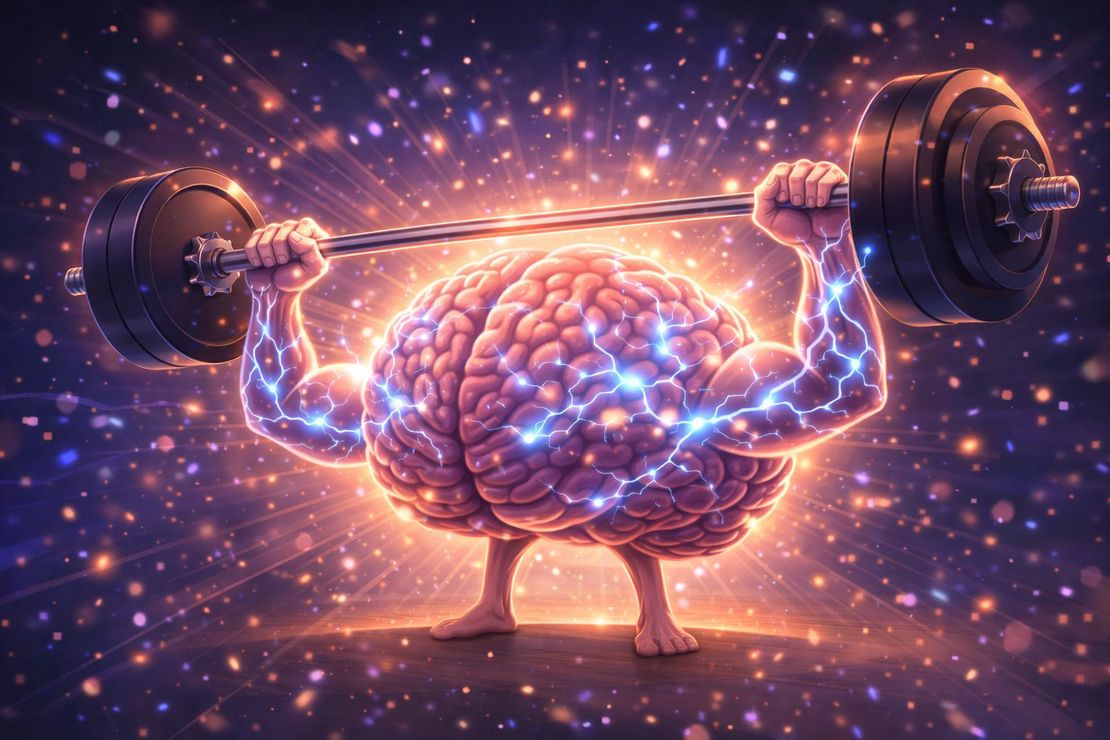
How to Use Neuroplasticity to Change Your Brain and Your Life
How to Use Neuroplasticity to Change Your Brain and Your Life This is the second part of my breakdown of neuroplasticity. If you missed it, start with Part 1: What Is Neuroplasticity which covers the science of how your brain rewires itself at the cellular level.
Read More