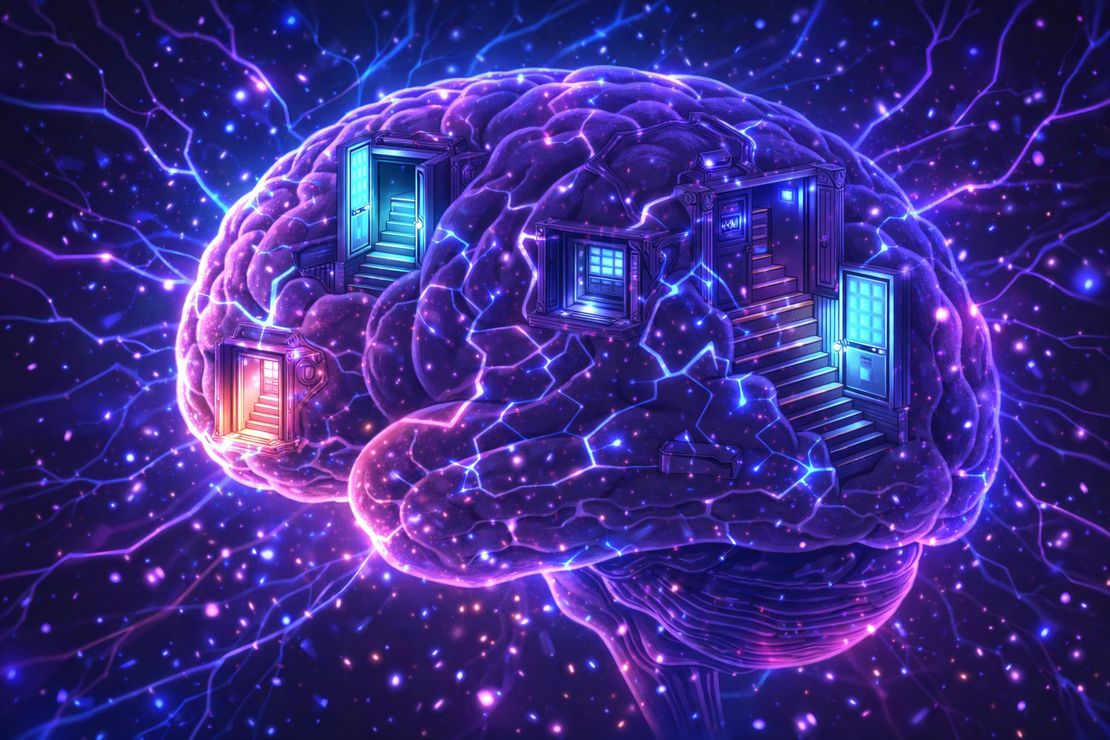
The Hidden Traps in Your Brain That Mess Up Your Decisions
I just heard something that genuinely blew my mind. There’s this expert named Sylvia Benito who talked about how our brains trick us into making terrible decisions - and how understanding neuroscience can help us do better.
The Two Systems In Your Head
Before we get into specific biases, we need to talk about how the brain makes decisions in the first place. Daniel Kahneman, a psychologist who won a Nobel Prize for this stuff, describes two systems running in your head at all times.
System 1 is fast and automatic. It’s the part of your brain that catches a ball without doing math or reads anger on someone’s face before they speak. System 2 is slow and deliberate. It’s what you use when you’re doing your taxes or figuring out a tricky problem.
Here’s the thing - System 1 runs most of your life. It’s efficient. Your brain burns through about 20% of your body’s energy even when you’re doing nothing, so it needs shortcuts to conserve resources. These shortcuts are called heuristics, and most of the time they work fine. The problem is they also produce systematic errors — what psychologists call cognitive biases.
System 2 is supposed to catch these errors. But System 2 is lazy. It prefers to nod along with whatever System 1 suggests because that takes less effort. So your brain makes a snap judgment, and unless something forces you to slow down, you never realize you made one.
The Biases That Fool Us All
Let me walk through the ones that mess with me the most. I’ve caught myself falling for every single one of these.
Confirmation Bias
This is the big one. Confirmation bias means you look for evidence that supports what you already believe and ignore everything else. I do this all the time with news. I read articles that agree with my politics and scroll right past the ones that don’t.
The scary part is it feels like intellectual honesty. You think you’re evaluating evidence fairly, but you’re really just building a case for what you already decided. In business, this is how you miss competitors, ignore market shifts, and convince yourself a failing strategy is working. It’s closely related to the broader set of psychological mind traps that distort thinking.
A concrete example: a hiring manager who thinks Ivy League graduates are the best candidates will find evidence supporting that in every Ivy League hire and dismiss non-Ivy hires as flukes even when their performance is identical.
The Availability Heuristic
This one is sneaky. Your brain judges how likely something is based on how easily examples come to mind. If you can picture it, you assume it’s common.
After 9/11, millions of Americans stopped flying and drove instead. But driving is statistically more dangerous per mile. The reason people feared flying more was simple — plane crashes make unforgettable news footage. Car accidents are boring and forgettable. The vivid images were more “available” in memory, so people’s brains concluded flying was the greater risk. It wasn’t.
This affects all kinds of decisions. You might avoid investing in stocks because you remember a crash, even though the long-term trend is up. You might fear shark attacks while ignoring the vending machine that’s statistically more likely to hurt you.
Anchoring
The first number you hear sets a mental anchor, and everything after that is measured against it. Real estate agents use this all the time. Show you an overpriced house first, and the next one that costs the same feels reasonable even though it’s still expensive.
But the effect is much broader than pricing. Studies show that when judges are asked to roll dice before sentencing, those who roll a higher number give longer sentences. The random dice roll becomes an anchor. That’s how irrational this bias is — it works even when you know the anchor is meaningless.
The Dunning-Kruger Effect
This one hurts to think about because I’ve been on both sides of it. Dunning-Kruger is the gap between perceived ability and actual ability. Beginners overestimate themselves wildly. Experts underestimate themselves.
When I first started learning about investing, I read two books and thought I had it figured out. I was in the peak of what researchers call “Mount Stupid.” The more I actually learned, the more I realized how much I didn’t know. My confidence dropped into what they call the “Valley of Despair.” Real competence only comes when you climb back out with earned confidence — the same principle behind the TED method for becoming an expert fast.
The irony is brutal: to know you’re incompetent requires a level of competence you don’t have. That’s why the worst performers in every field are also the most confident.
Hindsight Bias
After something happens, you tell yourself you knew it all along. Every post-game analysis on TV is full of this. “I knew they should have run the ball.” No you didn’t. You only think you did because now you know the outcome.
This bias makes learning from experience harder than it should be. If your brain insists you already knew what was going to happen, you don’t examine what you actually missed. You don’t update your mental models. You just feel smug and move on.
Base Rate Fallacy
This is the one that trips up doctors, judges, and smart people in general. Your brain ignores general statistics (base rates) and focuses on specific information instead.
Say a test for a rare disease is 99% accurate, and you test positive. Most people think they have a 99% chance of having the disease. The real answer depends on how rare the disease is. If 1 in 10,000 people have it, your actual chance after a positive test is about 1%. The test result sounds dramatic, but the base rate tells a different story. I wrote more about this kind of reasoning in the critical thinking guide on logic and biases.
The Blind Spots We All Have
One of the biggest issues Benito talked about was blind spots — things we can’t see about ourselves, usually because we lack the information or perspective to recognize them.
In investing and business, these blind spots can be devastating. You might think you’re making a great decision, but there’s actually something you’re missing that would change everything if you knew it.
The scary part is that you can’t see your own blind spots. That’s what makes them so dangerous. Each bias I listed above is a blind spot. You don’t notice when you’re confirming your own beliefs because it feels like you’re being thorough. You don’t notice when a random number is anchoring your judgment because you think you’re being rational.
How Neuroscience Helps
Here’s where it gets interesting. By understanding how our brains actually work, we can start to compensate for these weaknesses.
For example, once you know that people tend to be overconfident about their own abilities — a hallmark of the Dunning-Kruger effect — you can deliberately seek out other perspectives to balance that out. Once you understand that emotions affect decisions more than you think, you can try to account for that in your decision-making process.
The goal isn’t to become perfectly rational — that’s probably impossible. The brain didn’t evolve to be right. It evolved to survive. Sometimes those two things are different. But by understanding our weaknesses, we can make fewer mistakes.
Debiasing Techniques That Actually Work
Knowing about biases is one thing. Doing something about them is another. Here are the techniques I’ve found most useful.
Premortems. Before a big decision, imagine it went terribly wrong. What caused the failure? This forces your brain to look for problems you’d normally ignore because of overconfidence.
Reference class forecasting. Instead of predicting an outcome based on the specifics of your situation, look at what happened in similar situations. If 90% of startups fail, your brilliant business plan might not be as special as you think. This directly counters the base rate fallacy.
Slow down when it matters. System 2 only kicks in when you make it. For routine decisions, System 1 is fine. But for big ones — career moves, major purchases, important relationships — force yourself to pause. Give yourself 24 hours. Sleep on it. This is also a form of training your brain to handle hard things.
Actively seek disconfirming evidence. When you think you know the answer, spend as much time looking for evidence against your position as you did building support for it. Read people you disagree with. Hang out with people who think differently.
Write down your reasoning before you know the outcome. This is the best defense against hindsight bias. If you document your actual reasoning before a decision plays out, you can compare it honestly with what happened and learn something real.
Use decision journals. Keep a simple log of major decisions — what you decided, why, what you expected to happen, and how you felt at the time. Review it later. The patterns will shock you.
My Personal Application
Since learning this, I’ve tried to be more aware of my own thinking processes. When I make a decision, I try to ask myself:
What might I be missing? What am I not seeing? What would someone else think about this? Am I anchoring on the first piece of information I heard? Am I overconfident because I just learned enough to be dangerous?
It’s not foolproof, but it’s helped me avoid some mistakes I would have made otherwise. The most valuable change is that I no longer trust my first instinct on important decisions. I’ve learned that the fastest answer my brain offers is usually not the best one.
Frequently Asked Questions
Can you completely eliminate cognitive biases?
No, and you shouldn’t try. Biases are shortcuts your brain needs to function. The goal is to catch them in high-stakes situations. The brain’s neuroplasticity means you can train yourself to get better at this over time, but you’ll never be bias-free.
How do I know which bias is affecting my decision?
That’s the hard part. Biases operate below conscious awareness. The best approach is to have a checklist for big decisions. Am I seeking contrary evidence? Did I anchor on something arbitrary? Am I ignoring base rates? Over time, asking these questions becomes a habit that kicks in automatically.
Are some people more prone to biases than others?
Everyone has biases — they’re part of normal brain function. But some people are better at overriding them. The difference is usually training and practice, not intelligence. People who make better decisions aren’t smarter in general. They’ve just built better habits for catching their own errors.
Can experience make biases worse?
Yes, in some cases. Experience can make you more confident in your judgments without actually improving their accuracy. A veteran trader who has seen one market pattern repeat might become more anchored to that pattern and miss a regime change. Experience helps most when combined with honest feedback and systematic review.
What’s the single most effective debiasing technique?
If I had to pick one, it would be seeking disconfirming evidence. Almost every other bias gets weaker when you actively look for reasons you might be wrong. It’s uncomfortable, but it’s the closest thing to a mental vaccine I’ve found.
Understanding how your brain works is the first step to working with it instead of against it.
Related Posts
The Hidden Thinking Traps That Mess Up Your Decisions
The Hidden Thinking Traps That Mess Up Your Decisions I used to think I was a pretty good decision maker. I’d weigh the pros and cons. I’d think things through. I’d make rational choices — until I learned about the hidden thinking traps our brains fall into.
Read More
The Simple Mindset Shift That Can Change Your Life Forever
The Simple Mindset Shift That Can Change Your Life Forever When I was in school, I used to think that some people were just smart and others weren’t. You either got math or you didn’t. You were either good at sports or you weren’t. It felt like everyone was born with certain abilities and that was that.
Read More
The Navy SEAL Philosophy: Slow is Smooth, Smooth is Fast Explained
This is part 1 of a two-part series on the Navy SEAL philosophy of slow is smooth, smooth is fast. Read part 2: Real-World Applications and Practice →
Read More