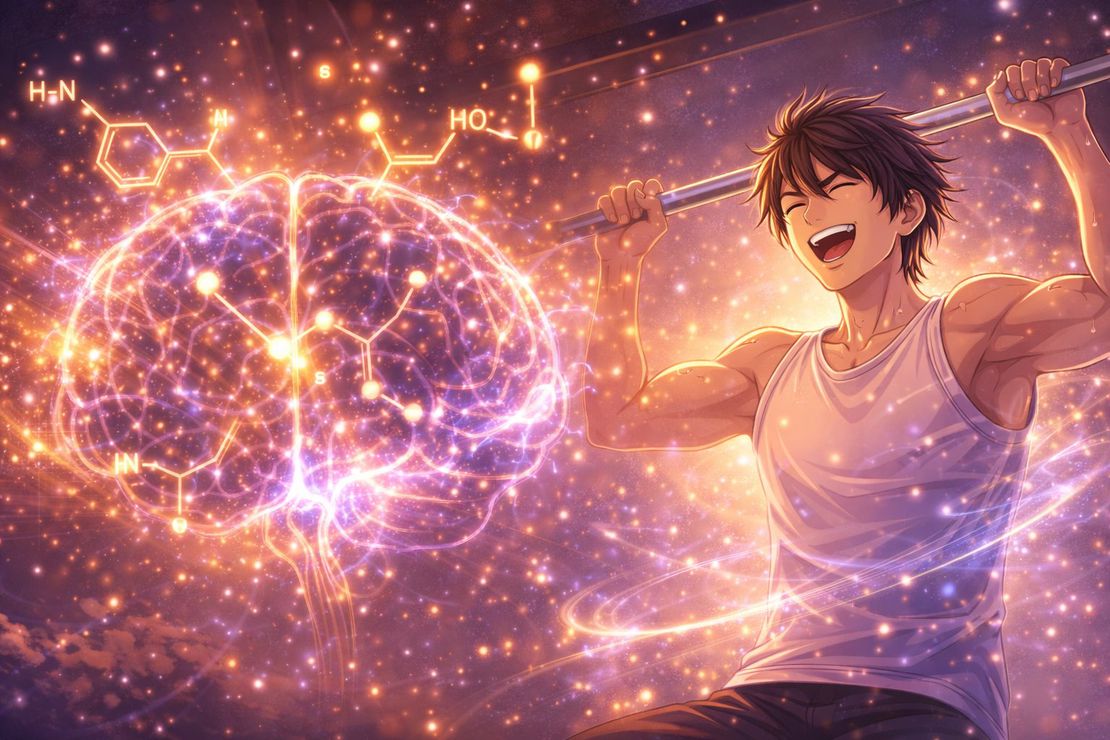
The Neuroscience Secret to Making Hard Work Feel Easy
I used to hate hard work. Actually, that’s not quite right. I hated the FEELING of hard work. The struggle, the discomfort, the resistance.
I thought that was just how it had to be. Some things are enjoyable, some things are hard. If you want results, you have to suffer.
But then I learned something from neuroscientist Andrew Huberman that changed everything. It’s possible to rewire your brain to actually enjoy effort.
The Wrong Way Most People Use Rewards
Here’s what most people do. They try to motivate themselves with rewards.
“I’ll work hard all day, and THEN I can relax and watch TV.” “If I finish this project, I’ll reward myself with something nice.” “I need to push through the hard stuff, and then I’ll get to enjoy the good stuff.”
Does this sound familiar?
Here’s the problem with this approach. When you focus on the reward that comes AFTER the work, you’re teaching your brain that work is just a means to an end. The work itself is unpleasant, and the reward is what feels good.
Over time, this makes work feel harder and harder. Your brain learns to avoid effort because it only expects relief at the end.
The Better Way: Dopamine During the Work
Here’s the secret. Your brain can release dopamine DURING effort, not just after it.
Dopamine is the molecule of motivation and drive. It’s what makes you want to do things. And you have more control over it than you think.
The key is to reframe how you think about the feeling of effort itself.
When you’re working hard and you feel that resistance, that discomfort - that’s your brain releasing stress chemicals like adrenaline and noradrenaline. These chemicals make you feel agitated and like you want to stop.
But here’s what’s cool. If you mentally embrace that feeling and tell yourself “this is where I’m getting stronger,” your brain ALSO releases dopamine.
You’re essentially tricking your brain into rewarding you for doing hard work.
The Internal Monologue Change
This is what you need to say to yourself (or think) when you’re doing something hard:
“This is difficult. This is uncomfortable. AND this is exactly where I’m getting better. The harder this feels, the more I’m growing.”
You have to say it like you mean it. You have to actually believe it.
But when you do, something magical happens. The difficulty stops feeling like something to escape from. It starts feeling like proof that you’re improving.
You’re not fighting the discomfort anymore. You’re using it.
Why This Works
Here’s what’s happening in your brain:
When you change your internal monologue, you’re activating your prefrontal cortex - the thinking part of your brain. This part can influence your reward system.
You’re essentially telling your brain “this effort is valuable, give me dopamine now” instead of “I’ll get dopamine later when this is over.”
The result? You get energy DURING the work, not just after. You become self-fueling.
How This Creates Unlimited Energy
Here’s what this leads to over time:
People who master this technique don’t need external motivation anymore. They don’t need coffee, music, or rewards to get things done.
The work itself becomes rewarding. The harder it gets, the more they enjoy it.
This is literally how elite performers and experts operate. They’re not suffering through hard work. They’re enjoying the feeling of effort.
And here’s the amazing part: you can train yourself to do this. It’s a skill. The more you practice, the better you get.
How to Practice This
Here’s how to start:
- Pick a difficult task
- When you feel the resistance, notice it
- Instead of wanting it to end, say (in your head): “This is difficult. This is where I’m getting better. This is the feeling of growth.”
- Focus on the fact that you’re taking action despite the difficulty
At first, it will feel forced. That’s okay. Keep doing it.
Over time, it becomes more natural. Your brain starts to associate effort with reward.
My Experience
I’ve been practicing this for a while now, and it’s changed how I work.
When I feel resistance now, I don’t fight it or give in. I embrace it. I tell myself “this is good, this is where I grow.”
It’s not always easy. But it’s different. The work feels different. More meaningful. More powerful.
I actually look forward to challenges now. Because I know they’re opportunities to feel that powerful feeling of growing.
The Bottom Line
You don’t have to wait for motivation. You don’t have to rely on external rewards. You can create your own motivation by changing how you think about effort.
Hard work doesn’t have to feel hard. It can feel like the reward itself.
Try this next time you’re doing something difficult. Notice the discomfort. Change your internal monologue. Embrace the effort.
See what happens. I think you’ll be surprised.
Related Posts
The Hidden Thinking Traps That Mess Up Your Decisions
The Hidden Thinking Traps That Mess Up Your Decisions I used to think I was a pretty good decision maker. I’d weigh the pros and cons. I’d think things through. I’d make rational choices — until I learned about the hidden thinking traps our brains fall into.
Read More
Why Passion Isn't Enough: The Real Path to Mastery
Why Passion Isn’t Enough: The Real Path to Mastery I’ve seen that quote everywhere. “Find what you love and let it kill you.” It sounds dramatic. It sounds dark. And honestly, it scared me for a long time.
Read More
Attachment Styles and the Neurochemistry of Love: From Infancy to Adult Relationships
Attachment Styles and the Neurochemistry of Love: From Infancy to Adult Relationships This is the second part of my breakdown of the neuroscience of emotions and relationships. Read Part 1: Limbic Friction and Emotional Regulation first. Part 3: Communication and Repair covers practical tools for couples.
Read More