Master Your Workflow: 4 Proven Strategies to Stop Being “Busy” and Start Being Productive
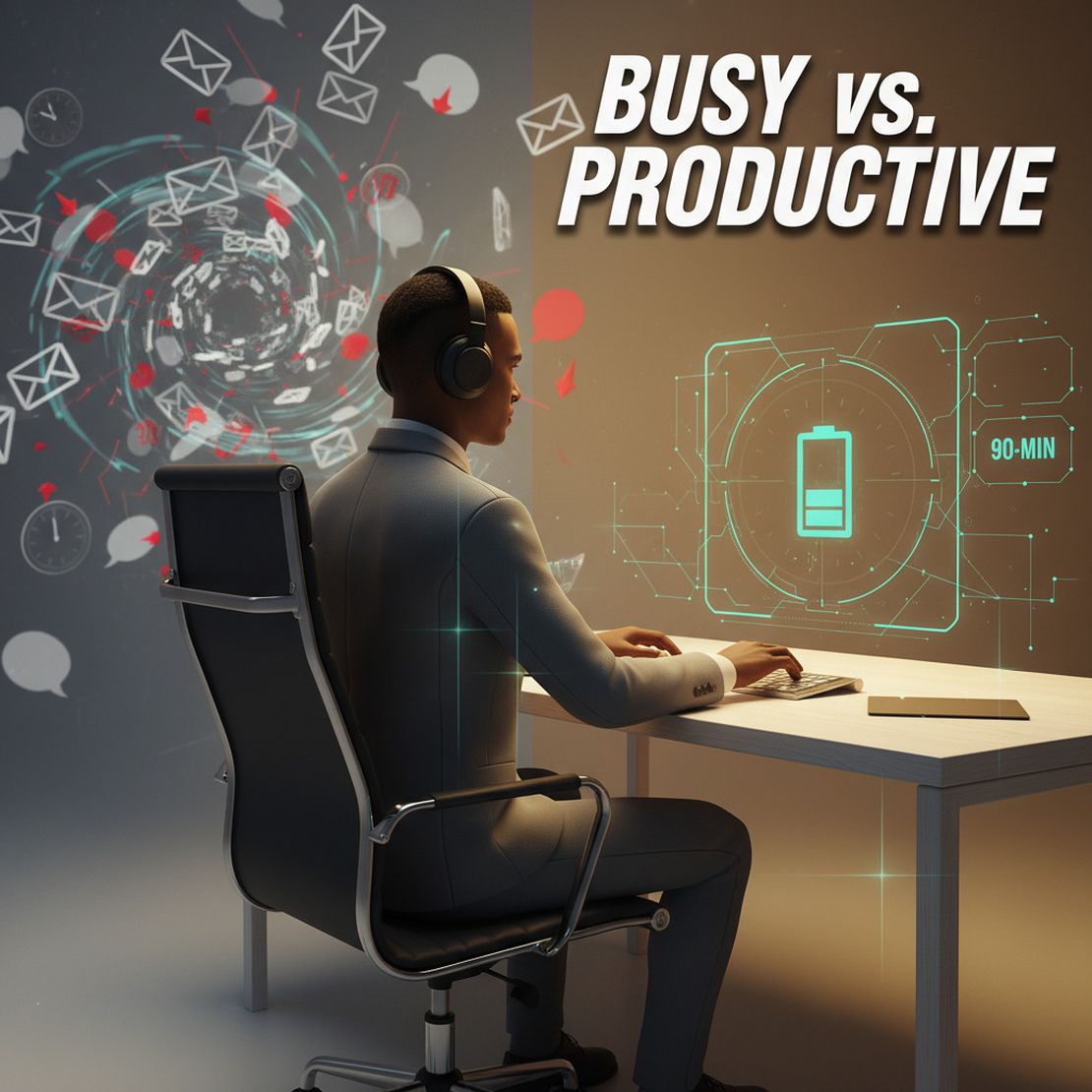
In the modern professional landscape, “busy” is often mistaken for “productive.” Most of us are drowning in a relentless stream of emails, Slack messages, and meetings. We reach the end of the day exhausted, yet with a nagging feeling that we haven’t accomplished our most significant work.
This is the core dilemma addressed in “Manage Your Day-to-Day,” edited by Jocelyn Glei. The insights within the book suggest that the solution isn’t to work harder, but to work smarter by making four specific choices. These strategies help shift your mindset from a state of reactive overwhelm to one of creative focus.
Here is how to optimize your workday for maximum impact.
1. Frequency: Consistency Over Intensity
A common mistake many professionals make is the “binge-working” approach. We tend to put off complex creative projects, waiting for a free weekend or a quiet holiday to dive in for eight hours straight. While the intention is good, the strategy is flawed.
The Problem with Bingeing
When you step away from a project for days at a time, you lose mental momentum. It takes significant cognitive energy to “cold start” a project again—remembering where you left off and re-entering the flow state.
The Solution: Daily “Background Processing”
Consistency is far superior to intensity. You should commit to working on your most critical project every single day, even if only for a short burst — this is the same principle behind why your morning domino effect sets you up for success.
When you engage with a problem daily, you keep it active in your subconscious. This allows for “background processing.” While you are driving, showering, or walking, your brain continues to untangle complex issues, leading to fresh insights the next time you sit down to work.
2. Timing: Prioritize Creation Before Reaction
According to behavioral economist Dan Ariely, when you do your work is just as important as what you do.
The Reactive Trap
Most people start their day by checking notifications—email, social media, and texts. This immediately triggers “Reactive Mode.” You spend your prime energy servicing other people’s priorities rather than advancing your own.
The Solution: The “Creative First” Rule
biologically, humans have a peak window of cognitive performance roughly two hours after waking up.
- Don’t check email first thing. Avoid the digital noise.
- Dedicate the first 90 minutes of your day to your most difficult, high-value task.
- Aggressively protect this time. Utilize your brain’s peak energy before the mental fog of reactive work sets in.
3. Triggers: Rituals Over Willpower
Starting is often the hardest part of any task. Relying on sheer willpower to switch from relaxation to high-focus work is inefficient and draining.
The Power of Rituals
Cal Newport, a thought leader on “Deep Work,” notes that great creative minds don’t wait for inspiration to strike. Instead, they establish rigid rituals (or triggers) to automate the transition into work mode — a concept closely related to achieving peak performance through flow states.
- Jack White books studio time to force creativity within a specific window.
- Stephen King sits at the same desk at the exact same time every morning.
The Solution: Create Your Own Trigger
Establish a strict sensory ritual associated with the start of your deep work block. This could be:
- Listening to a specific song on repeat.
- Brewing a specific type of coffee.
- Arranging your desk in a precise way.
Over time, this sensory input signals your brain to enter “work mode” automatically, bypassing the need for willpower entirely.
4. Energy Management: Work in Cycles, Not Marathons
Attempting to maintain laser focus for eight hours straight is biologically impossible. As Tony Schwartz explains, humans are biological organisms, not computers. We operate on Ultradian Rhythms—energy cycles that last approximately 90 minutes, similar to the concept of Parkinson’s Law and time hacking.
The Solution: Pulse and Pause
Trying to push past this 90-minute physiological limit results in diminishing returns, fatigue, and mistakes. To sustain high performance:
- Work in distinct blocks of 90 minutes.
- Take a real break. When the timer goes off, stop working.
- Renewal is key. Do not check email during your break. Instead, get water, walk, do breathing exercises, or grab a snack to reset your glucose levels.
Summary: The Ideal Morning Routine
To transform your productivity, combine these four strategies into a single, unbreakable morning protocol:
- Frequency: Touch your most important project every single day.
- Timing: Schedule this work for the first 90 minutes of your morning.
- Trigger: Use a specific ritual to start this block immediately.
- Renewal: Work for 90 minutes, then disengage completely to recharge for the next cycle.
By respecting your biology and establishing boundaries, you can stop just being busy and start getting things done.
Related Posts

The MAP Framework: Aligning Your Daily Tasks with Long-Term Goals
The MAP Framework: Aligning Your Daily Tasks with Long-Term Goals This is part 1 of a two-part series. Read part 2 here: Time Blocking and Deep Work: Execution Strategies for Maximum Productivity.
Read More
DAPPER Framework Part 1: How to Name Your Demon and Calculate the Price of Staying Stuck
DAPPER Framework Part 1: How to Name Your Demon and Calculate the Price of Staying Stuck This is part 1 of a 2-part series. Read part 2: excitement, reinvention, and breaking your patterns.
Read More
The Effective Executive: 5 Key Strategies for Leadership Mastery
The Effective Executive: 5 Key Strategies for Leadership Mastery In the world of management and personal productivity, few works are as influential as Peter Drucker’s The Effective Executive. The core premise of Drucker’s philosophy challenges the traditional view of success: intelligence and hard work alone are not enough. To truly succeed, one must cultivate the habit of effectiveness.
Read More