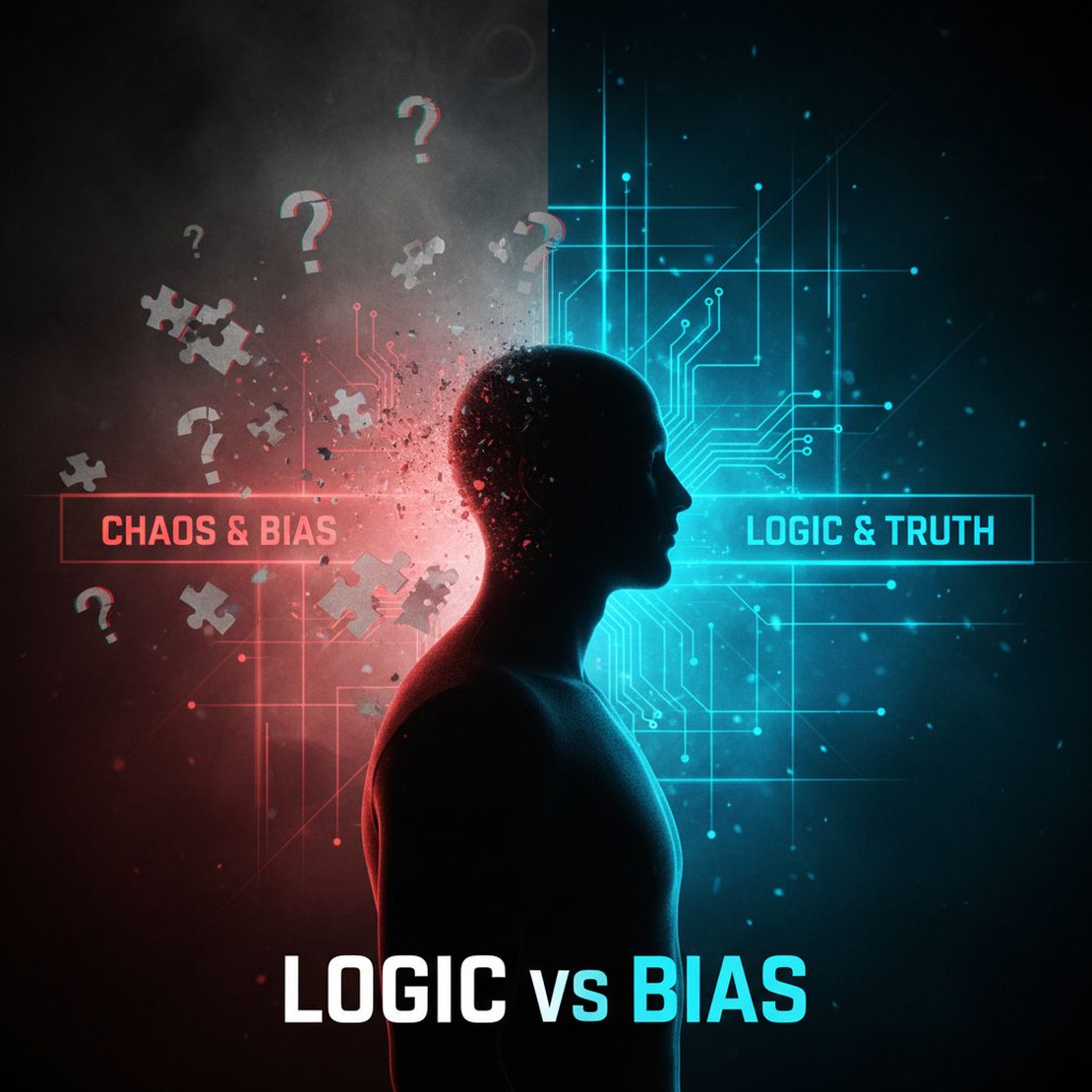
Mastering Critical Thinking: A Guide to Logic, Biases, and Truth
In an era defined by information overload and polarized debates, the ability to think clearly is more valuable than ever. Based on a deep-dive conversation with expert Nikita Nepryakhin on the “Made from Scratch” podcast, this guide explores the foundations of critical thinking, the cognitive traps that sabotage our decisions, and the structures of truth that define our arguments.
What is Critical Thinking?
At its core, critical thinking is metacognition—the act of thinking about thinking. It isn’t merely about debating others or finding faults in external arguments; it is the rigorous analysis of your own thought processes to minimize errors and make better decisions.
The journey toward critical thinking begins with intellectual humility. It starts when you admit that your brain is prone to laziness, distortions, and errors. Instead of accepting information on faith, a critical thinker is willing to pause, reflect, and double-check their own conclusions.
Information Hygiene in the Digital Age
One of the primary applications of critical thinking is information hygiene. We live in a landscape where social media algorithms cultivate “information bubbles,” feeding us content that reinforces our existing beliefs while filtering out dissenting views.
Breaking the Dopamine Loop
Social platforms are designed to create dopamine dependencies through likes and validation. This encourages superficial consumption rather than deep analysis. To counter this, Nepryakhin suggests:
- Consciously seeking opposing viewpoints.
- Verifying sources before sharing.
- Distinguishing facts from opinions.
- Analyzing data without emotional interference.
The Philosophical Foundation: Logic and Stoicism
Critical thinking is not a modern invention; it is deeply rooted in philosophy, particularly the Socratic method of questioning. It relies on:
- Informal Logic: Used for everyday reasoning to structure thoughts coherently.
- Dialectics: The practice of examining a situation from opposite angles to understand its full nature and inherent contradictions.
The Stoic Connection
Interestingly, Stoicism serves as a practical framework for critical thinkers. By distinguishing between what we can control (our thoughts and actions) and what we cannot (external events), Stoicism allows for emotional control. This emotional regulation is crucial because panic and heightened emotion are enemies of rational decision-making — something explored deeper in the Stoic wisdom of Marcus Aurelius.
Barriers to Rationality: Why We Use Stereotypes
Is it possible to be a critical thinker 100% of the time? The short answer is no. Humans are biological and emotional beings.
Our brains utilize stereotypes and labels as energy-saving mechanisms. While evolutionarily useful for quick categorization, these shortcuts prevent objective analysis in the complex modern world. The goal isn’t to be a robot, but to apply critical thinking in high-stakes situations—such as financial investments, career moves, or health decisions—rather than wasting mental energy analyzing every minor daily routine.
7 Cognitive Biases That Distort Reality
Nepryakhin highlights several key cognitive distortions that hinder rational thought. Many of these overlap with the 10 psychological mind traps that sabotage decision making. Recognizing these is the first step to overcoming them.
1. Confirmation Bias
The most common trap: searching for and interpreting information in a way that confirms what you already believe, while ignoring contradictory evidence.
2. Illusion of Control
The tendency to overestimate our influence over external events. A classic example is throwing dice harder in hopes of getting a higher number.
3. Halo Effect
When an overall impression of a person influences our judgment of their specific traits. For example, assuming a physically attractive person is also intelligent and kind.
4. Semmelweis Reflex
The knee-jerk rejection of new knowledge because it contradicts established norms or paradigms. This connects to the broader topic of hidden thinking traps that mess up your decisions.
5. Availability Heuristic
Estimating the probability of an event based on how easily examples come to mind. We fear plane crashes more than car accidents simply because plane crashes are more publicized and memorable, despite being statistically rarer.
6. The Florida Effect (Priming)
A psychological phenomenon where exposure to a stimulus influences behavior. Experiments have shown that thinking about words associated with “old age” can physically make a person walk slower.
7. Experimenter Effect
When a researcher’s own bias subconsciously influences participants to produce the expected outcome.
The 5 Types of Truth: How to Resolve Arguments
Conflicts often persist not because facts are wrong, but because people are arguing using different criteria for what constitutes “truth.” To resolve disagreements, diagnose which type of truth your opponent is using:
- Authoritative Truth: Based on trust in a source, expert, or religious text.
- Conventional Truth: Based on laws, traditions, or majority consensus.
- Empirical Truth: Based on sensory experience, measurement, and physical demonstration.
- Coherent Truth: Based on logical consistency within a specific system (even if the system itself is flawed).
- Pragmatic Truth: Based on utility—if it works and brings results, it is considered true.
Pro Tip: If you argue from Empirical Truth (data) and your opponent argues from Authoritative Truth (belief in a leader), you will never agree. You must first align your criteria for truth before debating the content.
Conclusion: From Knowledge to Skill
Merely knowing about biases and logic is not enough. Critical thinking is a skill that requires practice — much like the chess mental models that sharpen strategic thinking. It involves analyzing language for manipulation, spotting linguistic traps, and constantly challenging your own “Info-Bubble.”
By mastering these tools, you move beyond passive consumption and regain control over your decisions, ensuring that your choices are truly your own.
Related Posts

5 Ancient Learning & Memory Techniques to Supercharge Your Brain
5 Ancient Learning & Memory Techniques to Supercharge Your Brain I used to think having a bad memory was just something you lived with. I would forget names minutes after hearing them. I would read a book and struggle to recall what the first chapter was about by the time I finished the last one. Then I stumbled onto something that changed how I think about memory entirely.
Read More
10 Psychological Mind Traps That Sabotage Your Decision Making
10 Psychological Mind Traps That Sabotage Your Decision Making Do you believe your decisions are purely rational? Most of us like to think we are logical beings, carefully weighing the pros and cons before acting. However, psychologists and behavioral economists have long proven that human decision-making is far less controlled than we imagine.
Read More
6 Steps to Reinvent Yourself: The D.A.P.P.E.R. Framework for Success
6 Steps to Reinvent Yourself: The D.A.P.P.E.R. Framework for Success A few years ago I hit a wall. I was working hard and staying busy, telling myself I was making progress. But deep down I knew I was running in place. Same problems kept coming back. Same excuses. I kept thinking the next job or the next relationship would fix everything. It never did.
Read More