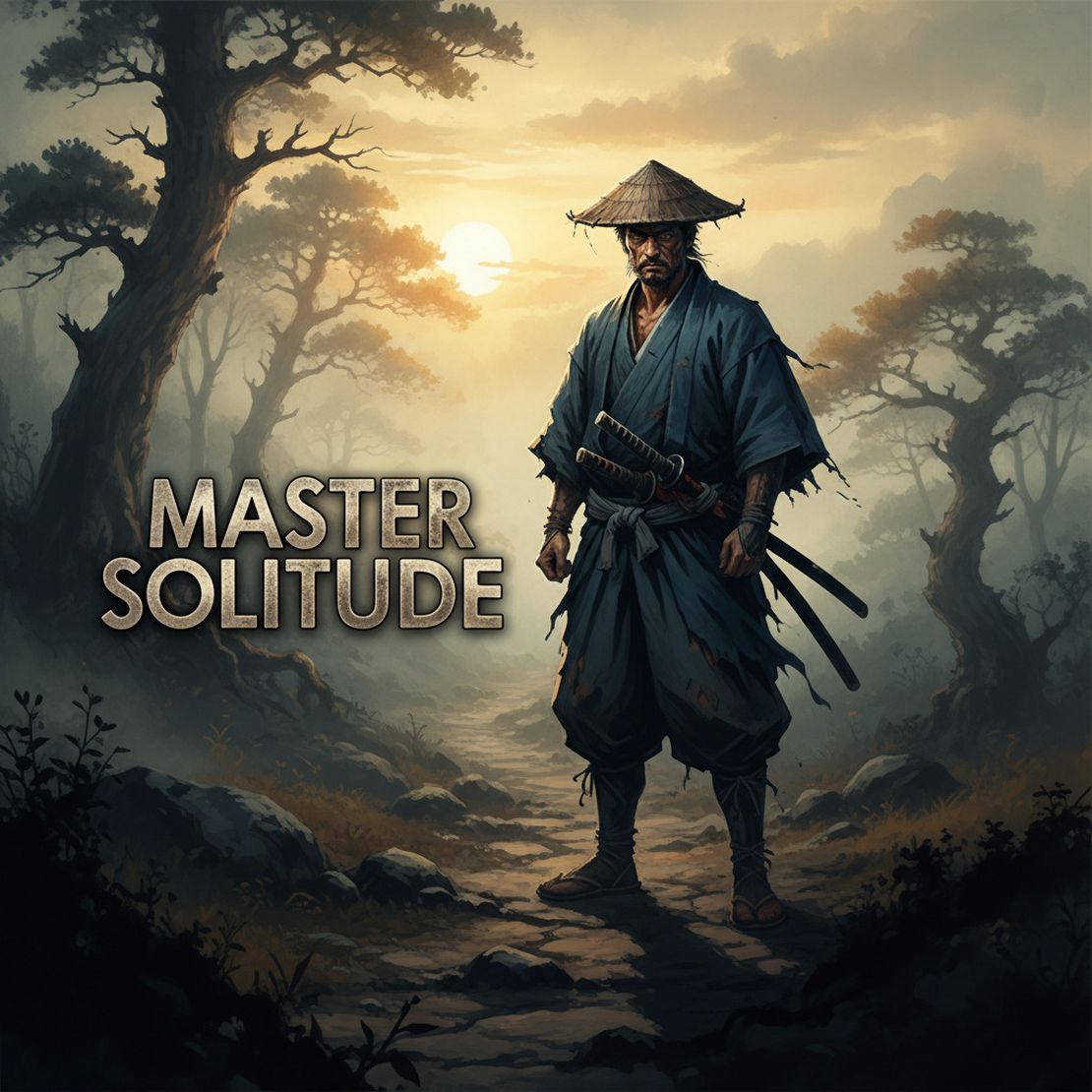
Miyamoto Musashi’s Dokkōdō: The Life of a Ronin and Principles 1-7
I remember the first time I read the Dokkōdō. It was late at night, I was feeling stuck, and I stumbled across this list of 21 precepts written by a 17th century Japanese swordsman. I expected a warrior code about fighting and honor. What I found was something stranger: a guide to being alone, a philosophy of radical self-reliance, and a surprisingly practical system for navigating modern life.
The Dokkōdō. The Way of Walking Alone. I have been living with these principles for months now, and they have quietly reshaped how I think about discipline, purpose, and what it means to build a life you can stand behind.
This is the first part of a series. Read Part 2: Principles 8-18 and Stoicism and Part 3: Applying the Dokkōdō to Modern Life.
Who Was Miyamoto Musashi
Before I get into the principles, you need to understand the person who wrote them.
Miyamoto Musashi lived in Japan during the early Edo period (1584 to 1645). This was a time when the country was transitioning from constant warfare to a more stable feudal society. The samurai class was still central, but their role was shifting from battlefield warriors to something more administrative.
Musashi was not your typical samurai. He was a ronin, a masterless swordsman who traveled across Japan challenging other sword schools to duels. He fought his first duel at age 13 and went on to win over 60 encounters without a single defeat. His most famous duel was against Sasaki Kojiro on Ganryujima island. Musashi arrived late, carved a wooden sword from a boat oar, and killed his opponent with one strike. That is the kind of pragmatism you see throughout his philosophy.
But Musashi was more than a fighter. In his later years, he became a respected artist. He produced ink paintings that are still studied today, including the famous “Koboku Meikakuzu” (a shrike perched on a withered branch). He carved sculptures. He designed gardens. And he wrote two books that have survived for centuries: The Book of Five Rings, a treatise on strategy and combat, and the Dokkōdō, his final statement on how to live.
He wrote the Dokkōdō just days before he died at age 61. It is short, direct and uncompromising. I have written about how his first five principles build self-discipline and I have also covered the path of solitude.
The First 7 Principles: Acceptance, Detachment, and Focus
The Dokkōdō is barely 200 words in the original Japanese. But each line carries the weight of a lifetime of experience.
Acceptance and Detachment (Principles 1 to 3)
1. Accept everything just the way it is.
This is the foundation. Musashi says stop fighting reality. If it is raining, you get wet. If you lost the duel, you lost. Acceptance is not resignation. It is the starting point for clear action. I used to waste so much energy arguing with reality, wishing things were different. This principle cuts through that completely. Accept what is, then act from there.
2. Do not seek pleasure for its own sake.
This one has been the hardest for me. We live in a world designed to deliver instant gratification. Social media, junk food, streaming, shopping. Musashi says pleasure is a trap when it becomes the goal. The real reward is in the discipline itself, in becoming someone who can do hard things. The more I practice this, the less I crave empty stimulation and the more I enjoy meaningful work.
3. Do not depend on a partial feeling.
Musashi warns against acting on incomplete information or half-formed intuition. Before you commit to a course of action, get clarity. This is not about avoiding risk. It is about making sure you are not fooling yourself with wishful thinking.
Control and Focus (Principles 4 to 7)
4. Think lightly of yourself and deeply of the world.
Do not take yourself too seriously. Your ego is not the center of the universe. When you think lightly of yourself, you become open to learning. You stop defending your mistakes and start fixing them. This connects to the growth mindset: the belief that you can improve through effort, as long as you stay humble enough to see what needs to change.
5. Be detached from desire your whole life long.
Musashi is not saying you should never want anything. He is saying do not let desire own you. When you are attached to a specific outcome, you lose adaptability. The warrior who needs to win has already lost, because that need creates hesitation and fear.
6. Do not regret what you have done.
Regret is useless. It changes nothing and wastes energy. This does not mean never reflect on mistakes. It means once you have learned the lesson, move on. The warrior replaying yesterday’s duel is not ready for today’s.
7. Never be jealous.
Jealousy is the most corrosive emotion. It takes your attention away from your own path and fixates on someone else’s. Musashi says cut it out completely. Other people’s success does not diminish you. Quitting social media helped me understand this principle better. When you stop comparing yourself to curated versions of other people’s lives, jealousy loses its grip.
What Makes These Principles Different
What strikes me about these first seven principles is how counterintuitive they are. Most self-improvement advice tells you to want more, try harder, and compare yourself to others for motivation. Musashi tells you the opposite. Accept what is. Stop chasing pleasure. Don’t compare.
This is not passive philosophy. It is a strategic withdrawal of attention from things that drain you so you can focus on what matters. The principles work together. Acceptance clears the ground. Detachment stops you from getting sidetracked by every desire. Focus directs your energy where it counts.
Continue to Part 2: Principles 8-18 and Stoicism to learn the rest of the code.
Frequently Asked Questions
Who was Miyamoto Musashi?
Miyamoto Musashi was a Japanese swordsman, philosopher, and artist who lived from 1584 to 1645. He won over 60 duels undefeated and wrote The Book of Five Rings and the Dokkōdō.
What does Dokkōdō mean?
Dokkōdō translates to “The Way of Walking Alone.” It is a set of 21 principles written by Musashi days before his death, focused on self-reliance, discipline, and solitude.
Is the Dokkōdō a religious text?
No. Musashi references Buddha and the gods in principle 19, but the text is not religious. It is a practical philosophy grounded in experience, not faith.
What is the difference between the Dokkōdō and The Book of Five Rings?
The Book of Five Rings is Musashi’s longer work on strategy and combat. The Dokkōdō is a shorter, more personal list of life principles. One teaches you how to fight and win. The other teaches you how to live.
Should I follow all 21 principles literally?
No. Musashi wrote these for himself based on his own experience. They are a starting point, not a rigid code. Adapt them to your own life.
Continue reading: Part 2: Principles 8-18 and Stoicism | Part 3: Applying the Dokkōdō to Modern Life
Related Posts
5 Ancient Learning & Memory Techniques to Supercharge Your Brain
5 Ancient Learning & Memory Techniques to Supercharge Your Brain I used to think having a bad memory was just something you lived with. I would forget names minutes after hearing them. I would read a book and struggle to recall what the first chapter was about by the time I finished the last one. Then I stumbled onto something that changed how I think about memory entirely.
Read More
Mastering Critical Thinking: A Guide to Logic, Biases, and Truth
Mastering Critical Thinking: A Guide to Logic, Biases, and Truth In an era defined by information overload and polarized debates, the ability to think clearly is more valuable than ever. Based on a deep-dive conversation with expert Nikita Nepryakhin on the “Made from Scratch” podcast, this guide explores the foundations of critical thinking, the cognitive traps that sabotage our decisions, and the structures of truth that define our arguments.
Read More
12 Books You Must Read Every Year for Maximum Return on Life
12 Books You Must Read Every Year for Maximum Return on Life Are you caught up in the vanity metric of reading a book a week? Many of us wear our “books read” count like a badge of honor, but is skimming through 52 books a year actually improving your life?
Read More