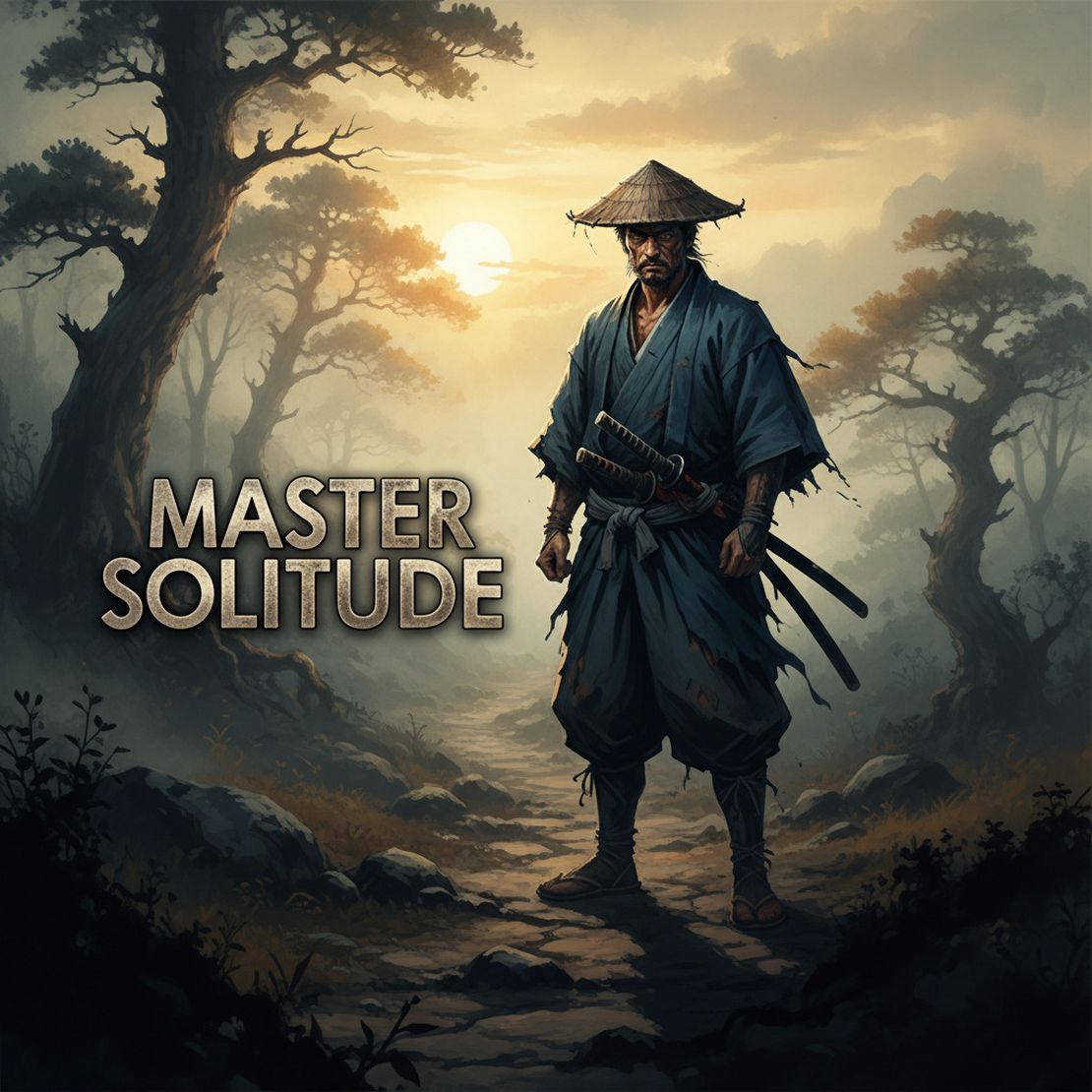
How to Apply Miyamoto Musashi’s Dokkōdō to Modern Life
This is the third and final part of my breakdown of the Dokkōdō. Read Part 1: Life and Principles 1-7 and Part 2: Principles 8-18 and Stoicism first.
Spirit and Dedication (Principles 19 to 21)
19. Respect Buddha and the gods without counting on their help.
Musashi believed in personal responsibility. You can respect tradition, but your actions determine your fate. Do not wait for outside intervention. Do the work yourself.
20. You may abandon your body, but you must preserve your honor.
Honor means integrity. Your reputation is what survives you. Your body will decay, but your principles endure. Live in a way you would be proud to have remembered.
21. Never stray from the Way.
The final principle is a command to stay the course. Once you have chosen your path, stick with it. Not blindly. Not stubbornly. But with the kind of commitment that sees you through doubt, hardship and temptation. This is the path of mastery, and it requires everything you have.
Which Principles Resonate Most Today
I have been sitting with these principles for a while, and a few of them hit harder than others in the modern context.
Accept everything just the way it is. This is the one I come back to most often. We live in an age of constant dissatisfaction. Ads tell us we are not enough. Social media shows us what we do not have. Algorithms keep us wanting more. Acceptance is the direct antidote. It clears the ground so you can actually move forward.
Do not seek pleasure for its own sake. Our economy runs on the reverse of this principle. Every app and product is designed to deliver a hit of dopamine and keep you coming back. Choosing discipline over pleasure in a world engineered for the opposite is a radical act.
Never be jealous. Jealousy is baked into the way we live now. We see highlight reels and feel inadequate. But Musashi saw this coming 400 years before the internet. The answer is the same: focus on your own path. Your lane is wide enough.
Do not fear death. Most of us are not in life-or-death duels. But we fear smaller deaths every day. Rejection. Failure. Looking foolish. The principle still applies. When you stop fearing the small deaths, you start taking the risks that matter.
How to Apply These Principles to Modern Challenges
Career and ambition. Principle 11 (have no preferences) helps me stay flexible when things go wrong. A project gets cancelled. A promotion goes to someone else. I remind myself: do not be attached to a specific outcome. Keep doing good work. Adapt.
Social media and comparisons. Principle 7 (never be jealous) and principle 15 (do not follow customary beliefs) together are a powerful filter. When I feel the pull of comparison, I ask: is this my path, or am I just following the crowd? Most of the time the answer is clear.
Relationships. Principle 8 (do not be saddened by separation) sounds cold, but it is actually freeing. People come and go. That is life. Accept it and you will be more present in the relationships you have, because you are not clinging out of fear.
Daily habits. Principle 2 (do not seek pleasure for its own sake) is my morning filter. Before I reach for my phone, I ask: is this pleasure serving me, or am I just looking for a distraction? Some days I answer wrong. But just asking the question shifts something.
The Loneliness of Mastery
I need to be honest. Walking this path is lonely. Not in a sad way. In a structural way.
When you commit to discipline, solitude, and the kind of self-reliance Musashi describes, you will find yourself out of sync with most people. Your friends will want to party while you want to train. Your colleagues will take the easy route while you take the hard one. Society is built around comfort and connection. The Dokkōdō asks you to step outside both.
This is the trade-off. The path of mastery requires sacrifice. You give up certain kinds of belonging. You give up the comfort of conformity. In exchange, you get clarity, self-respect, and a life that is truly your own.
Intentional solitude has power. But it is not for every phase of life. There are times when community matters more than discipline. The skill is knowing which phase you are in.
Finding Strength in Solitude
The strange thing about the Dokkōdō is that it is a guide for walking alone, written by a man who spent most of his life fighting other people. Musashi knew that true strength comes from being comfortable with yourself. When you no longer need external validation to feel whole, you become dangerous in the best possible way.
The solitude Musashi describes is not empty. It is full of purpose, full of practice, full of the quiet satisfaction of improving yourself day after day without anyone watching.
I have found that the more time I spend alone working on my craft, the better I am when I rejoin the world. The solitude charges something. It sharpens the edge.
Frequently Asked Questions
Is the Dokkōdō pessimistic?
I do not think so. It is realistic. It does not promise happiness or success. It promises clarity and self-respect. That is a better deal.
How do I start practicing the Dokkōdō?
Pick one principle that resonates with you and practice it for a week. Acceptance is a good starting point. Notice when you are fighting reality and practice letting go. Build from there.
Can I combine the Dokkōdō with other philosophies?
Yes. Many people combine it with Stoicism, minimalism, or zen practice. The principles are compatible with most self-discipline frameworks.
What is the most important principle?
Principle 1 (accept everything just the way it is) is the foundation. Without acceptance, none of the other principles have solid ground to stand on.
Walking Your Own Path
The Dokkōdō has been a quiet anchor for me. When I feel lost, distracted, or caught up comparing myself to others, I come back to these 21 principles. They do not solve every problem. But they give me a frame for thinking about what matters.
Musashi wrote this text knowing he was about to die. He had spent his whole life fighting, training and creating. He had nothing left to prove. The Dokkōdō is what came out when all the ego and ambition were stripped away. Just the bare bones of how to live.
That is why it still matters 400 years later. It is not a marketing pitch. It is not a self-help program. It is a warrior, alone in a cave, writing down what he learned so someone else might find it useful.
I have found it useful. Maybe you will too.
Start from the beginning: Part 1: Life and Principles 1-7 | Back to Part 2: Principles 8-18 and Stoicism
Related Posts
How to Find Your Ikigai: The Japanese Secret to a Long and Happy Life
How to Find Your Ikigai: The Japanese Secret to a Long and Happy Life Have you ever wondered what the secret is to a life filled with purpose, happiness, and longevity? The answer might lie in a concept from the island of Okinawa, Japan—a place famous for having the highest concentration of centenarians in the world. This concept is called Ikigai.
Read More
12 Books You Must Read Every Year for Maximum Return on Life
12 Books You Must Read Every Year for Maximum Return on Life Are you caught up in the vanity metric of reading a book a week? Many of us wear our “books read” count like a badge of honor, but is skimming through 52 books a year actually improving your life?
Read More
10 Psychological Mind Traps That Sabotage Your Decision Making
10 Psychological Mind Traps That Sabotage Your Decision Making Do you believe your decisions are purely rational? Most of us like to think we are logical beings, carefully weighing the pros and cons before acting. However, psychologists and behavioral economists have long proven that human decision-making is far less controlled than we imagine.
Read More