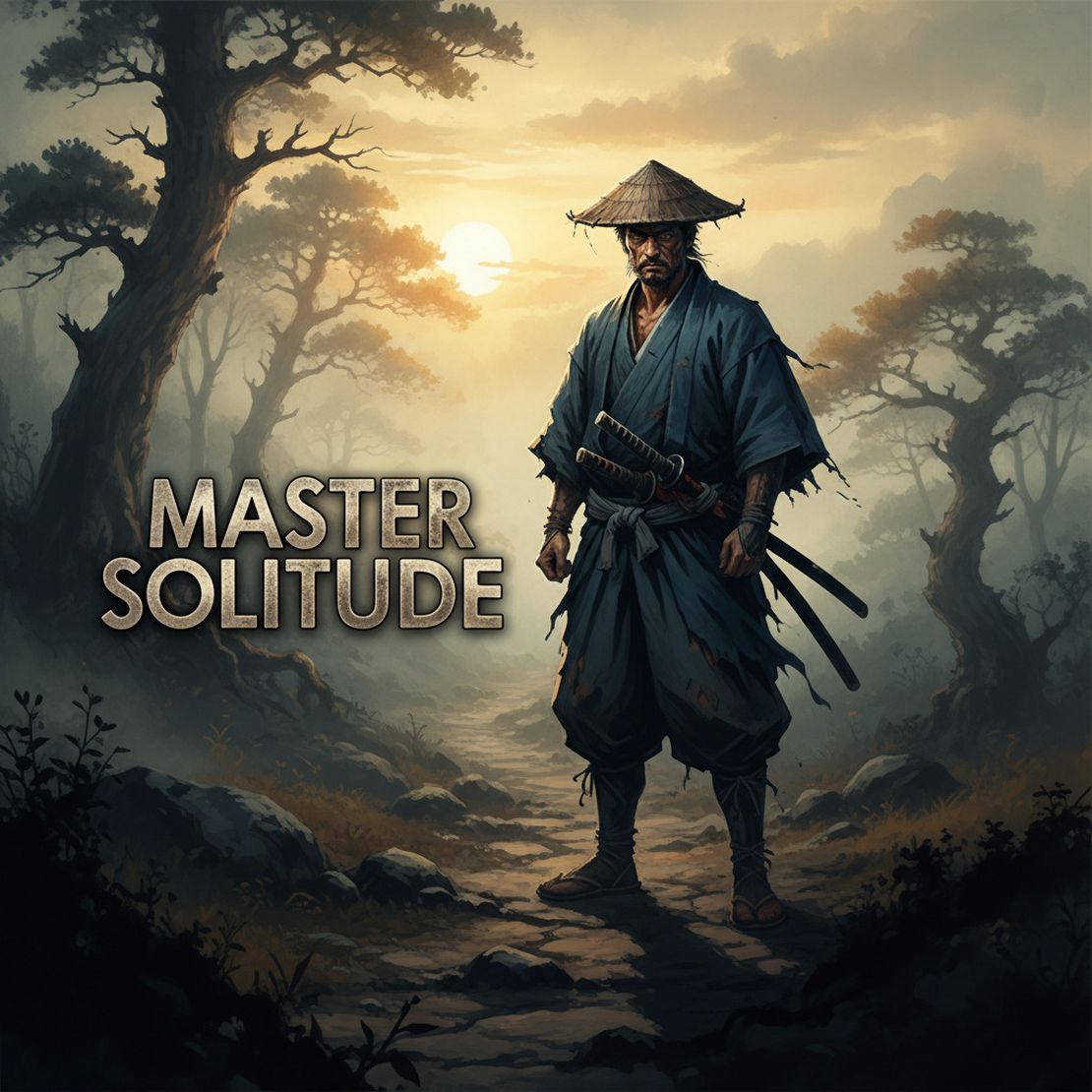
Dokkōdō Principles 8-18: Purpose, Resilience, and Honor
This is the second part of my breakdown of Miyamoto Musashi’s Dokkōdō. Read Part 1: Life and Principles 1-7 first if you haven’t already. Part 3: Applying the Dokkōdō to Modern Life covers the final principles and practical application.
Purpose and Discipline (Principles 8 to 11)
8. Do not let yourself be saddened by a separation.
People leave. Relationships end. People die. Musashi says accept this as natural. Mourning is human. But letting grief derail your entire path is a choice. The loner walks alone not because he does not care, but because he understands that attachment leads to suffering.
9. Resentment and complaint are appropriate neither for yourself nor others.
Complaining wastes breath. Resentment poisons the person holding it, not the target. If you have a problem, address it directly. If you cannot address it, let it go.
10. Do not let yourself be guided by the feeling of lust or love.
This sounds harsh, but Musashi is talking about the kind of emotional attachment that clouds judgment. He is not against love. He is against letting emotion override reason when big decisions are at stake.
11. In all things, have no preferences.
This is about flexibility. If you prefer one tool, one method, one outcome over all others, you become predictable and fragile. The warrior who only knows one stance can be defeated. If you need things to go a specific way to be happy, you have given away your freedom.
Practicality and Resilience (Principles 12 to 14)
12. Be indifferent to where you live.
Your environment should never define your state of mind. Whether you live in a palace or a hut, your discipline stays the same. I think about this when my routine gets disrupted. The goal is to be so grounded in principles that external circumstances do not shake you.
13. Never pursue the taste of good food.
This is about avoiding dependency on luxury and comfort. When you need fine things to be satisfied, you become a slave to your tastes. The warrior who can eat anything and be grateful is harder to corrupt.
14. Do not hold on to possessions you no longer need.
Musashi practiced radical minimalism. He owned almost nothing at the end. This principle is about constantly reassessing what you carry. Physical clutter creates mental clutter. Small habit changes around decluttering have a compound effect on mental clarity.
Self-Reliance and Honor (Principles 15 to 18)
15. Do not act following customary beliefs.
Think for yourself. Question the rules. Just because everyone does something does not mean it is right. The crowd is rarely wise, and critical thinking takes practice.
16. Do not collect weapons or practice with weapons beyond what is useful.
Do not buy gear you do not need. Musashi fought his most famous duel with a wooden sword carved from a boat oar. He did not need fancy equipment. Master the tools you have before acquiring new ones.
17. Do not fear death.
This is the core of the warrior mindset. Fear of death causes hesitation. In daily life, the same principle applies to fear of failure, embarrassment, or loss. These fears hold you back more than any external obstacle. Mental strength is built by facing what you fear, not avoiding it.
18. Do not seek to possess goods or fiefs for your old age.
Plan responsibly, but do not let anxiety about a hypothetical future run your life today. Hoarding wealth out of fear distracts you from the present.
Comparison with Stoicism
There is a reason the Dokkōdō gets compared to Stoic philosophy so often. The parallels are striking.
Both philosophies emphasize acceptance of what you cannot control, focus on inner character over external circumstances, preparation for death and adversity, and emotional resilience through self-discipline.
Musashi and Marcus Aurelius arrived at similar conclusions from different starting points. Aurelius was a Roman emperor trying to govern fairly under immense pressure. Musashi was a lone swordsman trying to survive and maintain his integrity. Both concluded that the key to a good life is internal, not external.
The main difference is social. Stoicism emphasizes community and duty to others. Aurelius wrote constantly about serving the common good. The Dokkōdō is more individualistic. It is about the loner walking their own path, not the citizen serving their city. Both have value. I find myself moving between them depending on the situation.
What These Principles Share
Principles 8 through 18 share a common thread: they are about cutting away dependencies. Dependencies on other people (separation, resentment). Dependencies on comfort and luxury (food, possessions). Dependencies on social approval (customary beliefs, fear of death).
Musashi strips these away one by one until you are left with only yourself. That is the point. When you depend on nothing external, nothing external can control you.
Continue reading: Part 3: Applying the Dokkōdō to Modern Life | Back to Part 1: Life and Principles 1-7
Related Posts
How to Apply Miyamoto Musashi's Dokkōdō to Modern Life
How to Apply Miyamoto Musashi’s Dokkōdō to Modern Life This is the third and final part of my breakdown of the Dokkōdō. Read Part 1: Life and Principles 1-7 and Part 2: Principles 8-18 and Stoicism first.
Read More
Stoicism in Practice: Daily Exercises, Common Misconceptions and FAQ
This is part 2 of a two-part series on Stoic wisdom. Read part 1: The Stoic Framework for Peace ←
Read MoreStop Wanting, Start Accepting: The Stoic Framework for Peace
This is part 1 of a two-part series on Stoic wisdom. Read part 2: Stoicism in Practice: Exercises, Misconceptions and FAQ →
Read More