
Why You Actually Need to Be Bored (Science Says So)
What do you do when you’re bored? Reach for your phone? Turn on the TV? Find something - anything - to fill the empty space?
You’re not alone. Most people can’t stand being bored. We live in a world of constant stimulation, and the thought of sitting still with nothing to do feels unbearable.
But here’s what I learned from Harvard professor Arthur Brooks: boredom might be the most important thing you’re avoiding.
The Modern Response to Boredom
Think about how you react when you feel bored. What’s your first instinct?
Most people’s instinct is to eliminate boredom immediately. Check your phone. Watch something. Listen to a podcast. Read something. Anything to escape the discomfort.
This is so common that we don’t even question it. Boredom feels bad, so we avoid it. That seems logical.
But what if that’s exactly wrong?
What Boredom Actually Is
Here’s something that might surprise you. Your brain isn’t “shutting off” when you’re bored.
It’s actually doing something incredibly important.
Your brain has two main networks:
- The Central Executive Network - used when you’re focused on a task
- The Default Mode Network - used when your mind is at rest
When you’re bored and not focused on anything, your Default Mode Network activates. And it’s incredibly active.
This network is responsible for:
- Memory consolidation
- Envisioning the future
- Analyzing social situations
- Connecting unrelated ideas (creativity!)
The “shower effect” - where you get your best ideas in the shower - happens because your Default Mode Network is free to work, which is closely related to how to enter the flow state and do your best work.
The Evolutionary Purpose of Boredom
Boredom isn’t a bug - it’s a feature.
Evolutionarily, boredom developed as a signal. Similar to hunger or pain, it’s your body telling you to do something different.
When you’re bored, it’s a signal that your current activity has low value. It’s pushing you to explore, to seek new opportunities, to find better uses of your time.
Without boredom, humans might never have explored new lands, invented new tools, or created new art. Boredom drives innovation and growth.
The Modern Problem
Here’s where things went wrong. Modern technology figured out how to hijack this system — the same kind of dopamine hijacking that the Newport-Huberman protocol for quitting social media is designed to undo.
When you feel bored, your phone is there with an endless supply of stimulation. Social media, videos, games - all designed to give your brain quick hits of dopamine, the universal currency of drive.
It’s like junk food for your brain. It satisfies the craving temporarily but has no nutritional value.
The problem is that this prevents your brain from doing the important work it does when you’re bored. You never get the creativity, the memory consolidation, the future planning.
You’re always stimulated but never fulfilled.
The Cost of Constant Stimulation
Research shows that chronic avoidance of boredom through technology is linked to:
- Higher anxiety
- More depression
- Less creativity
- Poor memory
When you never allow yourself to be bored, you never give your brain the rest it needs to do its most important work.
What To Do Instead
Here’s the challenge: embrace boredom on purpose.
This doesn’t mean you need to be bored all the time. It means you need to schedule time when you’re NOT stimulated.
Try these:
- Take a walk without your phone — reconnecting with nature is a great way to do this
- Sit quietly without any devices
- Let yourself wait without filling the time
- Practice “boredom meditation” - just sit with nothing
I know this sounds uncomfortable. That’s the point.
Start Small
If the idea of being bored sounds terrifying, start small.
Try 5 minutes. Sit somewhere with nothing to do. No phone, no book, no music. Just you and your thoughts.
It will feel weird at first. You might feel anxious. That’s normal.
But after a few times, something shifts. You start to get comfortable with your own thoughts. You might even start to enjoy it.
My Experience
I used to be terrified of boredom. Every moment had to be filled. I had podcasts playing, articles to read, always something.
Then I tried deliberately being bored. At first, it was terrible. I felt like I was wasting time.
But then something started happening. I had better ideas. More creativity. I solved problems that had been bothering me for weeks.
Now I schedule “boredom time” every day. It’s become one of the most productive parts of my day - even though I’m not “doing” anything.
The Bottom Line
Boredom isn’t your enemy. It’s actually one of your brain’s most important tools.
The next time you feel bored, don’t reach for your phone. Try sitting with it. See what happens.
Your brain will thank you.
Related Posts

Two Simple Rules That Will Transform How You Get Things Done
Two Simple Rules That Will Transform How You Get Things Done Have you ever heard of the “2-minute rule”? Most people have. But here’s what most people don’t know: there are actually TWO different 2-minute rules.
Read More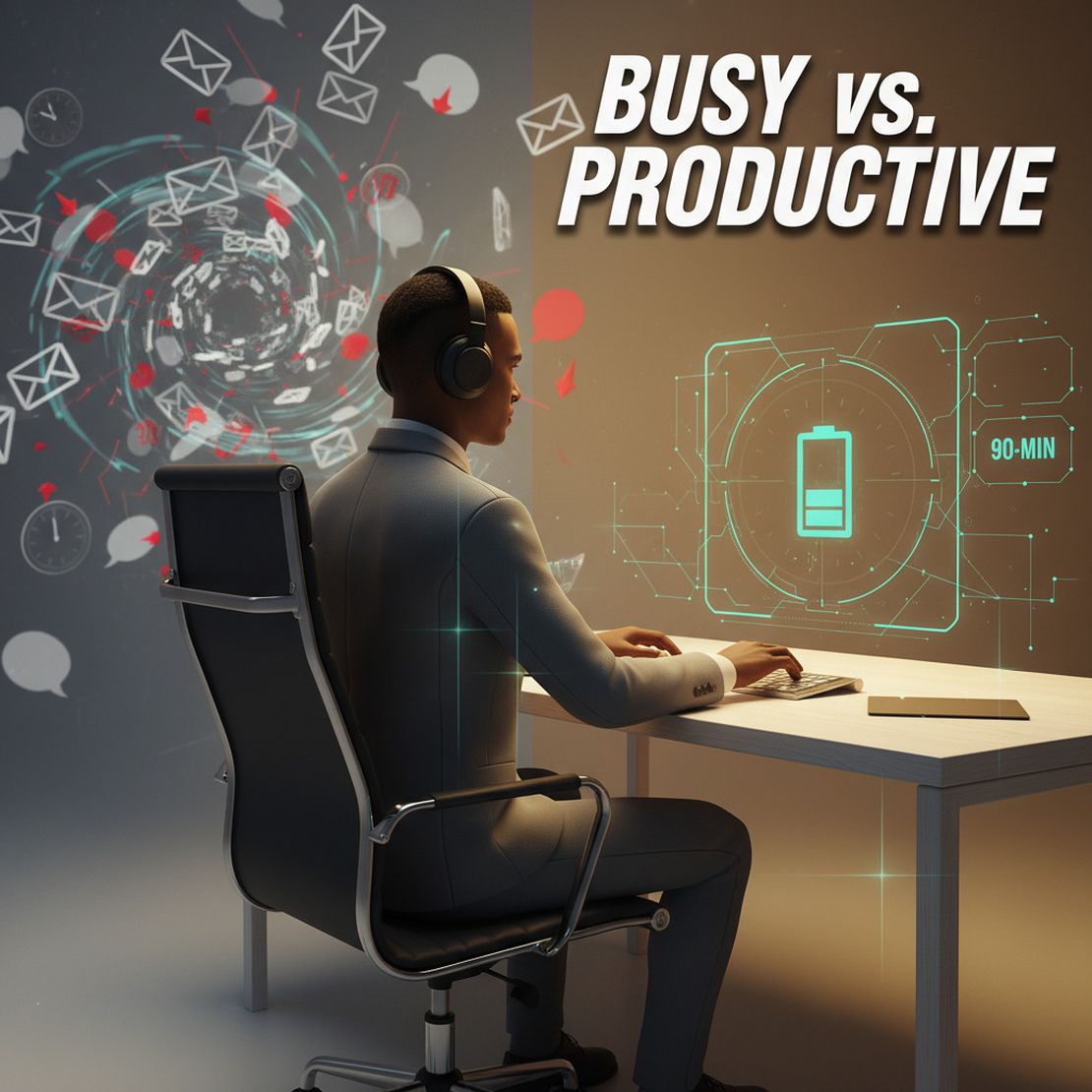
Master Your Workflow: 4 Proven Strategies to Stop Being "Busy" and Start Being Productive
Master Your Workflow: 4 Proven Strategies to Stop Being “Busy” and Start Being Productive In the modern professional landscape, “busy” is often mistaken for “productive.” Most of us are drowning in a relentless stream of emails, Slack messages, and meetings. We reach the end of the day exhausted, yet with a nagging feeling that we haven’t accomplished our most significant work.
Read More
Parkinson's Law Productivity Hacks: Work Smarter in Less Time
Parkinson’s Law Productivity Hacks: Work Smarter in Less Time This is the second part. Read Part 1: Parkinson’s Law Explained first if you need the background.
Read More