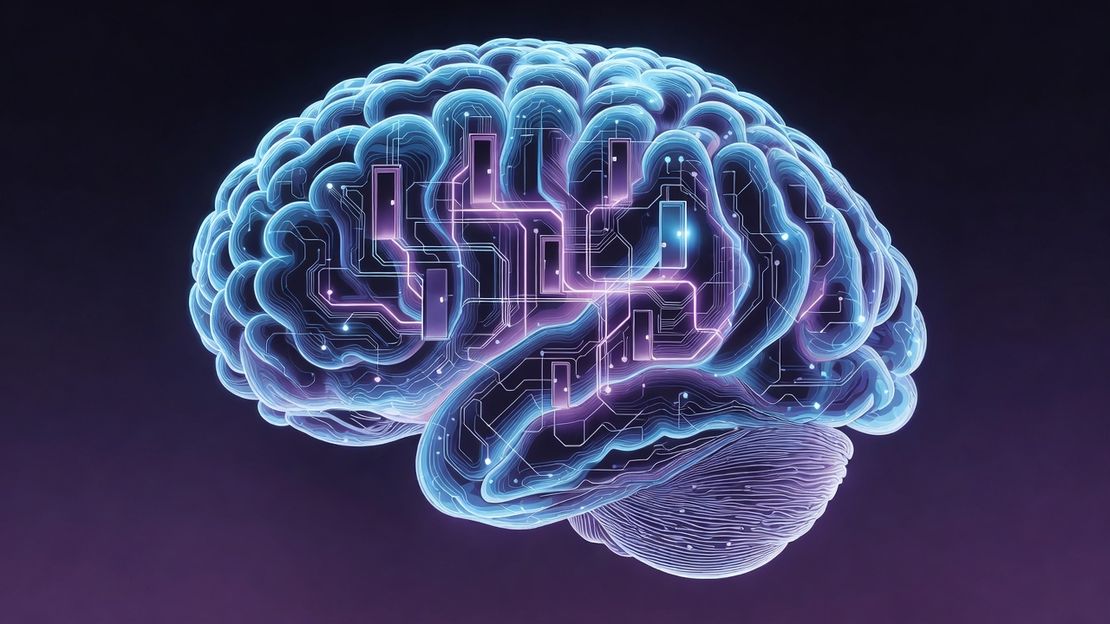
The Hidden Thinking Traps That Mess Up Your Decisions
I used to think I was a pretty good decision maker. I’d weigh the pros and cons. I’d think things through. I’d make rational choices — until I learned about the hidden thinking traps our brains fall into.
Then I watched a presentation by neuroscience expert Sylvia Benito. And I realized how wrong I was. Our brains are wired to make mistakes. We have blind spots we don’t even know about.
The Problem With Rational Thinking
Here’s something that surprised me. We like to think of ourselves as rational creatures. We make decisions based on facts and logic.
But Benito explained that most of our decisions aren’t really rational. They’re driven by unconscious factors we’re not aware of.
Think about it. Have you ever made a “logical” decision that you later regretted? That’s because the logic was flawed. The decision wasn’t really based on facts. It was based on hidden biases.
What Are Blind Spots?
Blind spots in thinking are areas where we can’t see our own errors. They’re like the blind spot in your eye - there’s a part of your vision you literally can’t see.
Every person has thinking blind spots. We all have biases we don’t recognize. We all make errors we’re not aware of.
The problem is we think we’re being objective when we’re not. We think we’re being logical when we’re being biased. And we never see it coming.
Common Thinking Errors
Here are some of the blind spots Benito talked about:
Confirmation Bias
This is when we look for information that confirms what we already believe. We ignore evidence that contradicts our beliefs — one of several psychological mind traps that sabotage decision making.
If you think a certain investment is good, you’ll look for reasons it’s good. You’ll ignore warning signs. You’ll dismiss critics.
This is why it’s so hard to change people’s minds. They’re not seeing the same facts you are. They’re actively filtering out information that doesn’t fit their worldview.
Overconfidence
We tend to think we’re better at things than we actually are. We’re overconfident about our abilities, our knowledge, our predictions.
Studies show that most people think they’re above-average drivers. That’s mathematically impossible. But we all believe it about ourselves.
This leads us to take risks we shouldn’t take. We think we can handle things we can’t.
The Sunk Cost Fallacy
This is when we keep investing in something because we’ve already invested so much. Even when it’s clear the investment isn’t working.
Think about staying in a bad relationship. Or continuing to pour money into a failing business. Or finishing a terrible book you hate. Recognizing these patterns is a key part of mastering critical thinking.
We don’t want to “waste” what we’ve already spent. But that money, time, effort is gone. The question should be: what’s the best thing to do going forward? Not: how do I justify what I already did?
How Neuroscience Helps
Here’s why understanding the brain helps. Once you know these biases exist, you can watch for them.
You can say: “Wait, am I just looking for confirmation of what I believe?” Or “Am I overconfident about this?”
This doesn’t eliminate the bias. But it reduces its power. Awareness is the first step.
Making Better Decisions
So how do we make better decisions given these limitations? Here’s what I’d suggest:
First, acknowledge you have blind spots. You’re not as rational as you think. Your brain is biased in ways you can’t see.
Second, seek out other perspectives. Other people can see your blind spots — this is why strategic thinking and mental models from chess emphasize looking at problems from different angles. They have different biases, which can cancel yours out.
Third, slow down. Fast decisions are usually more biased. Take time to think things through.
Fourth, look for evidence against your beliefs. Actively seek information that contradicts what you want to be true.
Fifth, question your confidence. Ask yourself: why am I so sure? What could I be missing?
The Bottom Line
Here’s what I learned from Benito. We’re not rational machines. We’re biased beings with blind spots we can’t see.
But that doesn’t mean we’re doomed. We can make better decisions by understanding how our brains work.
Recognize the traps. Watch for the errors. Seek other perspectives.
Your decisions will still be flawed. But they’ll be less flawed than before. And that’s how progress works.
Know thyself - especially the parts you can’t see.
Related Posts

Dark Triad Psychology: Recognizing Manipulation and Building Authentic Influence
Dark Triad Psychology: Recognizing Manipulation and Building Authentic Influence This is the second part. Read Part 1: The Science of Power Perception for the foundations.
Read More
The Neuroscience Behind Successful People's Mental Routines
The Neuroscience Behind Successful People’s Mental Routines I’ve always been fascinated by why some people seem to crush it every single day while the rest of us struggle to get anything done. Is it genetics? Luck? Having the right parents?
Read More
Mastering Critical Thinking: A Guide to Logic, Biases, and Truth
Mastering Critical Thinking: A Guide to Logic, Biases, and Truth In an era defined by information overload and polarized debates, the ability to think clearly is more valuable than ever. Based on a deep-dive conversation with expert Nikita Nepryakhin on the “Made from Scratch” podcast, this guide explores the foundations of critical thinking, the cognitive traps that sabotage our decisions, and the structures of truth that define our arguments.
Read More