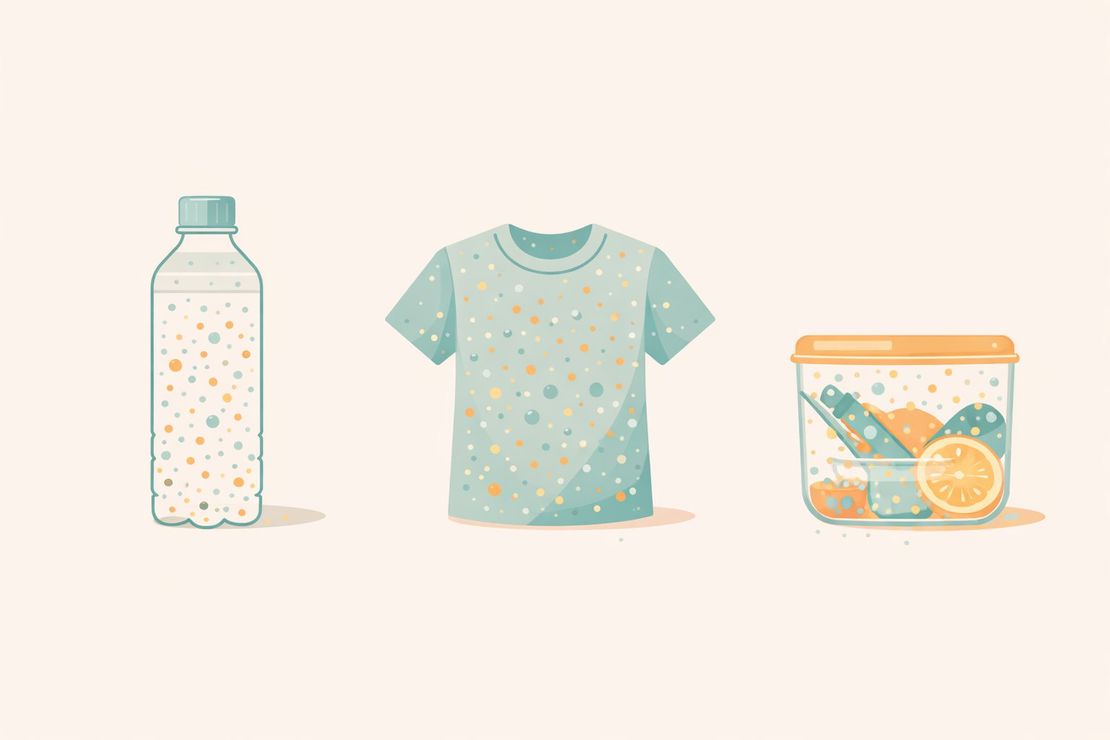
I Checked Everything After Learning What’s in Our Bodies (Here’s What I Found)
Okay, so I told you about the microplastics situation in my last post. After that, I couldn’t stop thinking about all the ways plastic might be getting into my body. So I went on a little investigation around my own home and life. What I found was pretty eye-opening.
My Plastic Audit
I started going through my daily routine and looking at everything I touch, eat, and breathe. Let me walk you through what I found.
First, let me start with what I wear. I had no idea how much of my wardrobe is made from synthetic materials. Looking at the labels on my clothes, most of my shirts, pants, and even my socks are some form of polyester or nylon. That’s basically plastic.
Then I looked at my bedding. Those cozy sheets that feel so soft? Polyester. My pillows? Probably some kind of synthetic fill. And my mattress - don’t get me started.
Then in the kitchen. Plastic containers, plastic wrap, plastic bags, plastic water bottles. So much plastic everywhere I looked.
And I haven’t even mentioned my phone case, my earbuds, my laptop case - all plastic.
This was honestly a bit overwhelming. Plastic is literally everywhere in modern life.
Breaking Down the Three Main Entry Points
Let me go through each way plastic gets into our bodies in more detail, along with what I learned about each one.
Breathing It In
This one surprised me the most. It turns out that every single indoor environment has plastic particles floating in the air. They come from our clothes, our furniture, our carpets, our electronics - basically everything made of plastic slowly breaks down and releases tiny particles into the air.
The really concerning thing is that these particles are so small that we breathe them right into our lungs. From there, they can get into our bloodstream and travel around our bodies.
Some simple things that can help:
- Air purifiers with HEPA filters
- Opening windows when possible to improve ventilation
- Reducing the amount of synthetic materials in your home
- Vacuuming with a good HEPA-filtered vacuum
Eating and Drinking It
This is probably the most well-known way we ingest plastic. Studies have found microplastics in:
- Bottled water (sometimes a lot)
- Tap water
- Fish and seafood
- Salt
- Beer
- Even in fruits and vegetables
The question is: how much does this actually affect us? Scientists are still figuring that out. But here’s what I’ve started doing:
I switched from plastic water bottles to a stainless steel bottle. I got a good water filter for my tap. I store food in glass containers instead of plastic. I try to avoid eating too much processed food. And I think twice before reheating food in plastic containers.
Absorbing Through Skin
This one hadn’t occurred to me before. When synthetic fabric touches your skin, the particles can be absorbed into your body. And it’s not just clothing - it’s also things like:
- Couch cushions
- Car seats
- Office chairs
- Gym equipment
The part that really got me was thinking about underwear and sheets. These are in constant contact with some of the most sensitive areas of your body for hours every day.
Since learning this, I’ve started switching to natural fibers. It’s not cheap to replace everything, but I’m gradually replacing synthetic items with cotton, linen, and other natural alternatives as they wear out.
What I Actually Changed in My Life
Here’s what I’ve done so far in my quest to reduce plastic exposure:
In the Kitchen
I got rid of most of my plastic containers and switched to glass and stainless steel. I keep plastic wrap to a minimum. I never microwave food in plastic anymore. I got a good water filter.
In My Wardrobe
I’m slowly replacing synthetic clothes with natural fibers. I prioritized underwear, socks, and sleepwear since those have the most direct contact with skin. I’m more careful about buying new polyester clothes.
At Home
I got an air purifier for my bedroom. I opened up windows more often. I checked what was in my furniture and tried to reduce exposure where I could.
In My Habits
I started reading labels more. I think about what’s touching my skin. I choose glass or metal over plastic when I have the option.
Why I’m Not Freaking Out
I want to be clear - I’m concerned but not panicked. Here’s why:
First, we’re just learning about this. The science is still developing. We don’t know everything yet, and things might not be as bad as they seem.
Second, stressing out isn’t helpful. The goal is to make gradual improvements, not achieve perfection. We can’t eliminate all plastic from our lives - it’s just too pervasive.
Third, our bodies are resilient. We’ve been exposed to all kinds of environmental factors throughout human history. Our bodies know how to deal with some level of foreign substances.
The Bigger Picture
This whole investigation has made me think more broadly about our relationship with the environment. We’ve created all this plastic, and it’s literally becoming part of us.
It’s a strange situation. We’re surrounded by materials designed to be durable, but they’re breaking down into tiny pieces that get into our bodies. We wanted convenience, and we got this.
I don’t think we can go back to a world without plastic. It’s too useful and too entrenched. But we can be more mindful about how we use it and try to reduce our exposure where we can.
What You Can Do
If you’re interested in reducing your plastic exposure, here’s where I’d suggest starting:
- Start with water. Get a filter or switch to glass/stainless steel bottles.
- Check your clothes. Look at what you’re wearing closest to your skin.
- Think about food storage. Glass containers are worth the investment.
- Consider your sleeping environment. Your sheets and pillowcases matter.
Don’t try to change everything at once. Pick one thing and start there.
Bottom Line
I’ve learned a lot through this process. Plastic is everywhere, and it’s getting into our bodies in ways we didn’t fully understand before.
But rather than feeling helpless, I choose to focus on what I can control. Small changes add up over time—the same principle behind why tiny habits can transform your life. And being informed is the first step to making better choices.
What changes have you made after learning about this? Do you think about plastic exposure in your daily life? I’d love to hear what’s worked for you.
Small steps in the right direction are still steps forward.
Related Posts

The Scary Thing Scientists Found in Men's Bodies (And What You Can Do)
The Scary Thing Scientists Found in Men’s Bodies (And What You Can Do) I’m not going to lie - when I first heard about this, I was pretty out. Scientists have found microplastics in human testicular tissue. Yes, you read that right. Tiny pieces of plastic are inside all of us, and they’re particularly found in places that affect men’s health. I looked into this more and wrote about everything I found about plastic in our bodies.
Read More
Practical Ways to Reconnect with Nature in Daily Life
Practical Ways to Reconnect with Nature in Daily Life This is part 2 of a two-part series. Read part 1 here: The Science of Nature Connection: What Happens to Your Brain Outside.
Read More
The 15-Minute Morning Routine That Science Says Changes Everything
The 15-Minute Morning Routine That Science Says Changes Everything I used to hit snooze about five times every morning. Then I’d rush around late, skip breakfast, and start my day already feeling behind. Sound familiar?
Read More