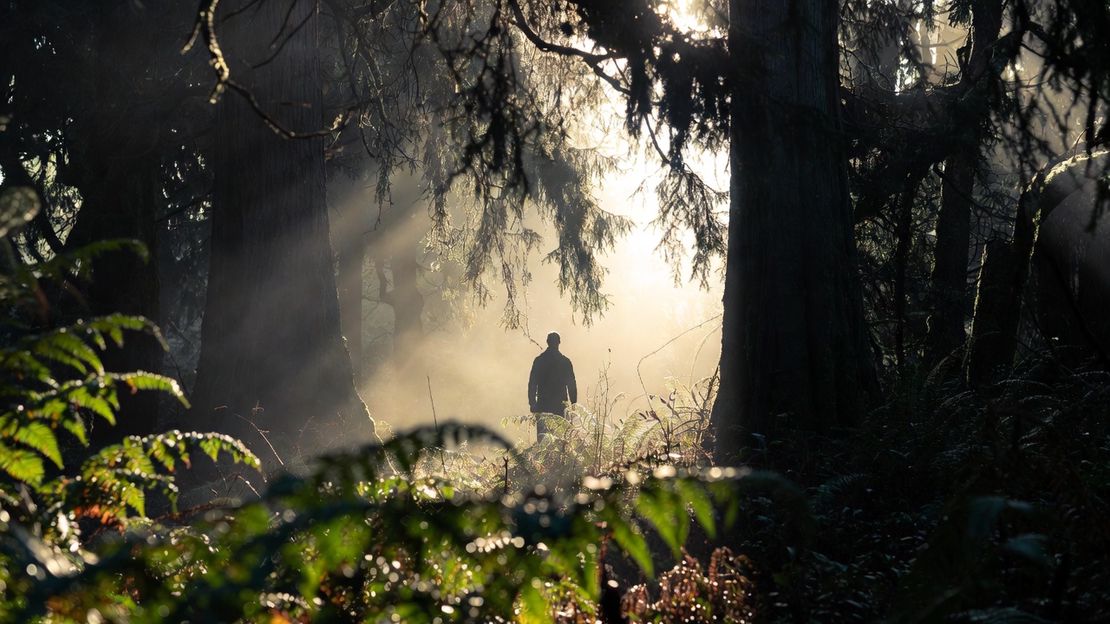
The Science of Nature Connection: What Happens to Your Brain Outside
This is part 1 of a two-part series. Read part 2 here: Practical Ways to Reconnect with Nature in Daily Life.
I did not think much about my relationship with nature until I moved to a city with almost no parks. After six months of walking between concrete buildings, riding the subway, and staring at screens, I noticed something. My sleep got worse. I felt irritable for no reason. My attention span shortened. I stopped being able to think clearly.
A friend told me to go sit in a botanical garden for an hour. I thought it sounded ridiculous, but I tried it. And something shifted. Not dramatically. Not like a spiritual awakening. But my shoulders dropped. My breathing slowed. I slept better that night.
That experience sent me down a rabbit hole. I wanted to know what was actually happening inside my body and brain when I spent time around trees and soil and silence. What I found changed how I think about the modern world. The research is more specific than I expected.
The Human-Nature Connection
The biologist E.O. Wilson popularized a concept in the 1980s called the biophilia hypothesis. The idea is simple. Humans evolved in natural environments for almost our entire existence as a species. Our brains and bodies shaped themselves in response to plants, animals, weather, and landscapes. Wilson argued that we carry an innate affinity for living things, hardwired through millions of years of evolution.
This is not a mystical claim. It is an evolutionary one. Our ancestors who paid attention to natural patterns survived better than those who did not. Reading the sky for storms, recognizing animal tracks, knowing which plants were edible. These skills kept people alive. The parts of the brain that handled these tasks got refined over generations.
Then came agriculture. Then cities. Then industry. Then smartphones. In evolutionary time, the shift happened fast. We now spend about 90 percent of our time indoors, according to the Environmental Protection Agency. The environments our brains evolved for and the environments we actually live in no longer match.
What Science Actually Says
I spent a lot of time reading the studies on nature and health. Three lines of research stood out to me.
The Stanford nature walk study. In 2015, researchers at Stanford led by Gregory Bratman took two groups of participants on a ninety-minute walk. One group walked through a busy highway corridor in Palo Alto. The other group walked through a nearby natural area with oak woodlands and grassland. Before and after the walk, both groups completed mood assessments and had their brains scanned. The nature walkers showed reduced activity in the subgenual prefrontal cortex, a brain region linked to rumination, the repetitive negative thinking pattern that often precedes depression. The highway walkers showed no change. This is the kind of study I keep coming back to because it is controlled and measurable. It is not a survey. It is brain tissue changing in response to what a person sees.
Attention Restoration Theory. The psychologists Rachel and Stephen Kaplan developed this framework starting in the 1980s. Their argument is straightforward. Directed attention, the kind you use to focus on a spreadsheet or a conversation in a noisy room, is a limited resource. It depletes over the course of a day. Natural environments, they argued, engage a different kind of attention, one that does not require effort. You do not have to strain to look at a tree or listen to birdsong. This gives your directed attention system a chance to rest and replenish. I think about this every time I feel my concentration slip in the afternoon and instinctively reach for my phone. What I actually need is ten minutes looking at something green.
Japanese forest bathing studies. Japan has a practice called shinrin-yoku, which translates to forest bathing. It is not a workout. You walk slowly through a forest, paying attention to what you see, hear, and smell. The Japanese government has funded research on this since the early 2000s. The results are consistent. Forest bathing sessions reduce cortisol levels, lower heart rate, decrease blood pressure, and improve immune function. One study from the Nippon Medical School found that a two-hour forest walk increased natural killer cell activity, a type of white blood cell that fights infections and tumors, by 50 percent. The effect lasted more than a week.
What Happens to Your Brain in Nature
The neuroscience behind these effects is becoming clearer. When you walk into a natural environment, your sensory system shifts. The sounds are different. Instead of the unpredictable noises of traffic and machinery, you get wind in leaves, water moving, birds calling at irregular intervals. This matters because the brain spends a lot of energy processing unexpected sounds, a phenomenon called the orienting response. Natural sounds are more predictable and less jarring, so the brain does not have to work as hard.
Your visual system also relaxes. Urban environments are full of sharp edges, straight lines, and high-contrast patterns that the visual cortex has to parse. Nature is fractal. Trees branch in patterns that repeat at different scales, and the visual system processes these patterns efficiently without effort. This is why looking at a landscape can feel restorative in a way that looking at a building does not.
There is also evidence that time in nature changes the balance of stress hormones. Cortisol levels drop. Adrenaline drops. At the same time, parasympathetic nervous system activity increases, the branch of your nervous system that controls rest and digestion. This is the opposite of fight-or-flight. It is the state where healing happens.
I should mention that none of this requires dramatic wilderness. A 2019 study from the University of Michigan found that just twenty minutes in any natural setting, even an urban park, was enough to significantly lower cortisol levels. The key was that people had to put their phones away and actually pay attention to the environment.
Continue reading: Practical Ways to Reconnect with Nature in Daily Life covers nature deficit disorder, biodiversity and mental health, how to find nature in the city, and practical steps to build nature into your routine.
Tags :
Related Posts
Practical Ways to Reconnect with Nature in Daily Life
Practical Ways to Reconnect with Nature in Daily Life This is part 2 of a two-part series. Read part 1 here: The Science of Nature Connection: What Happens to Your Brain Outside.
Read More
How Weather, Nature, and Wildlife Shape Life in the City
Walk through any city on a given morning and you will witness something remarkable: thousands of people moving through space, each responding in their own way to the same environmental conditions. Some quicken their pace under gray skies, others slow down to enjoy the warmth of sunshine on their face. A child stops to watch a pigeon while their parent checks the time. A jogger breathes deeply near a park entrance. These small moments reveal a simple truth we are all connected to nature, even in the most built-up environments. Reconnecting with the natural world is essential for modern wellbeing.
Read More