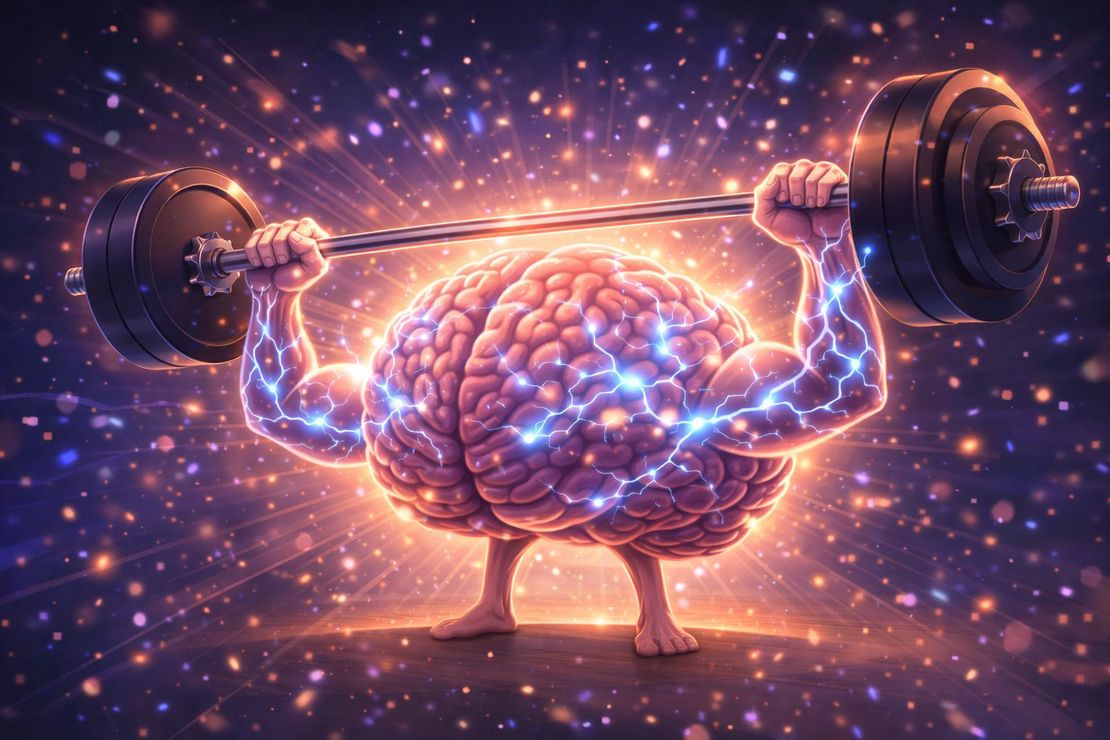
What Is Neuroplasticity: How Your Brain Rewires Itself at Any Age
I used to think that once you became an adult, your brain was basically done. You were who you were. You could not really get smarter or learn new things as easily as when you were young.
Man, was I wrong.
This is the first part of a two-part series. Read Part 2: How to Use Neuroplasticity to Change Your Life.
Where the Idea of a “Fixed Brain” Came From
For most of the 20th century, neuroscientists believed the adult brain was static. You got the brain you were born with, and after a certain age, it stopped changing. This idea had real staying power because it matched people’s intuition. Kids pick up languages like sponges. Adults struggle. So the brain must harden with age, right?
Not exactly. The first cracks in this view appeared in the 1960s. A scientist named Paulo Rakić was studying the developing brains of rhesus monkeys and noticed something unexpected. He saw that new neurons were forming not just before birth, but well after. His work pointed to the possibility that the brain never truly stops building itself.
Then came Michael Merzenich in the 1980s. Merzenich, now considered the father of neuroplasticity research, mapped the brains of monkeys and showed that when a monkey lost a finger, the brain region that used to process that finger did not go silent. It got reassigned to neighboring fingers. The brain literally rewired itself in response to changed input.
Later, Norman Doidge popularized this science in his book “The Brain That Changes Itself,” collecting stories of stroke patients relearning movement, people born with half a brain functioning normally, and adults overcoming learning disabilities. His message was the same one Merzenich found in the lab: your brain is not fixed. It adapts.
How Neuroplasticity Works at the Cellular Level
When people say “your brain rewires itself,” what actually happens inside your skull? Three main processes.
Synaptic pruning. Your brain makes many more connections than it needs. Throughout life, the ones you use get strengthened and the ones you do not get cut away. This is why practice matters so much. Every time you repeat something, you are literally telling your brain “keep this connection.” When you skip practice, those same connections get tagged for removal. Think of it like a garden. You are not growing new plants from scratch most of the time. You are watering some plants and letting others die.
Dendritic branching. Each of your neurons has branches called dendrites that reach out to other neurons. When you learn something new, these branches grow and form new connections. This is where the real physical growth happens. More branches mean more possible connections. More connections mean more processing power for that particular skill. This is why experts in any field literally have more neural tissue dedicated to their specialty than beginners do. London cab drivers, for example, have larger hippocampi from memorizing the city’s streets.
Myelination. This one is less talked about but just as important. Your neurons are wrapped in a fatty substance called myelin, which works like insulation on an electrical wire. The better the insulation, the faster the signal travels. When you practice a skill, your brain wraps more myelin around the relevant circuits. The signal gets cleaner, faster, and more reliable. This is why something feels “smooth” once you have done it enough. It is not just that you know what to do. The actual wiring in your brain has physically changed.
Critical Periods and the Truth About Adult Plasticity
There is a real phenomenon called critical periods. During early development, the brain is especially plastic. This is why children learn languages with native accent and why fixing a lazy eye is much harder after age 8. The brain’s windows for certain types of learning do not stay open forever.
But people overstate how much this matters for adult life. Here is what the research actually says.
The human brain retains significant plasticity well into old age. What changes is not whether you can learn, but how. Children soak up information through passive exposure. Adults need focused attention. A child can learn a language by being around it. An adult needs deliberate practice. But the adult brain has something children do not: a prefrontal cortex that can direct its own learning.
Adults can decide what to learn, plan how to learn it, and override their own impulses to keep practicing when it gets hard. That executive control matters. It means that even though adult neuroplasticity requires more effort, it can be more targeted and efficient. This is related to the flow state that emerges when you push into the zone of difficulty that spurs growth.
What Actually Drives Neuroplasticity
Not all experiences change your brain equally. Four things matter most.
Attention. You cannot rewire your brain by passively absorbing information. You have to be focused. When your attention is elsewhere, the neuromodulators that signal “this is important, encode it” do not get released. This is why watching a documentary on 2x speed while scrolling your phone does nothing for your brain. You have to actually pay attention. The neuroscientist’s gap effect works precisely because those short breaks force your attention to reset.
Repetition. One exposure does nothing. Your brain needs repeated signals to commit resources to a change. This is why cramming fails and spaced repetition works. Each repetition tells the brain “yes, this keeps happening, invest in it.” The neuroscience of habit formation depends on this same repetition signaling.
Sleep. This one surprises people. Your brain does most of its rewiring while you sleep. During deep sleep, your brain replays the patterns from the day and consolidates them into lasting change. If you sleep poorly, you weaken or lose most of what you practiced. This is non-negotiable. Your brain cannot build strong new connections without the sleep to consolidate them.
Novelty. The brain ignores predictable patterns. It lights up for things that are new or unexpected. If you do the same thing the same way every day, your brain stops paying attention to it. To drive neuroplastic change, you need to vary your practice. Introduce new challenges. Push just past the edge of what you can do. The old idea of reprogramming your brain to crave hard work is basically about using novelty and reward to keep the plasticity process running.
Frequently Asked Questions
Is neuroplasticity real or a buzzword?
It is real. The term refers to measurable, observable changes in the structure and function of the brain. We can see dendritic branching, synaptic pruning, and myelination under microscopes. We can track functional reorganization using fMRI. It is one of the best-documented phenomena in modern neuroscience.
Can adults really grow new brain cells?
Yes, but mostly in the hippocampus, which is involved in memory and learning. This process is called neurogenesis. The rate of neurogenesis in adults is much lower than in developing brains, but it continues throughout life. Exercise, sleep, and learning new things all support it.
Can the brain recover from injury through neuroplasticity?
To some extent. After a stroke or traumatic brain injury, surrounding regions can take over lost functions through a process called functional reorganization. It is slow and requires thousands of repetitions, but the results can be remarkable. Read more in Part 2: How to Use Neuroplasticity.
Continue reading: Part 2: How to Use Neuroplasticity to Change Your Life
Related Posts
The Brain Magic Behind Learning Faster (And How to Use It)
The Brain Magic Behind Learning Faster (And How to Use It) I’ve always been curious about why some people seem to learn impossibly fast. You know the type. The friend who picks up a new language in three months. The colleague who masters a complex software tool over a weekend. I used to think they were just gifted. Born with better brains.
Read MoreHow to Use Neuroplasticity to Change Your Brain and Your Life
How to Use Neuroplasticity to Change Your Brain and Your Life This is the second part of my breakdown of neuroplasticity. If you missed it, start with Part 1: What Is Neuroplasticity which covers the science of how your brain rewires itself at the cellular level.
Read More
Ancient Memory Techniques: The Memory Palace and Visual Anchoring
Ancient Memory Techniques: The Memory Palace and Visual Anchoring This is part 1 of a 2-part series. Read part 2: book-thread method, Avadhana, and the wax tablet technique.
Read More